
By Colby Lewis, The Law Offices of Colby Lewis, 815 Walker St., Suite 452, Houston, TX 77002

Slip, trip, and fall cases look simple on intake but require a distinct analytical framework to win.
If you handle personal injury cases long enough, you will take on a slip, trip, and fall matter. And if you are not careful, you will lose it. These cases are deceptively difficult. They look straightforward on intake, but the details that determine outcomes are technical, standards-driven, and unforgiving if you get them wrong early.
I have spent years working through the specifics of STF litigation, and the single biggest mistake I see attorneys make is treating these cases like any other premises liability file. They are not. Slip, trip, and fall lawsuits require a distinct analytical framework, a working knowledge of the applicable standards that define the standard of care, and a clear understanding of what your client actually experienced. Get the theory of the case wrong at the outset, and you will spend months headed in the wrong direction.
This post is for practicing personal injury lawyers. It covers the foundational material you need before you take or defend your next STF case.
Stop Calling It an “Accident”
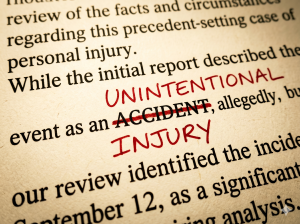
The safety industry is phasing out the word accident because it implies injuries cannot be prevented.
Before getting into the legal framework, a note on terminology that matters more than most attorneys realize. In the safety industry, the word “accident” is being phased out. The reason is simple: it implies that injuries occur by chance and cannot be foreseen or prevented. That framing undermines your case before you even file.
The more appropriate terms are “unintentional injury,” a description of the injury itself (e.g., fractured tibia), or a specification of the injury-producing event (e.g., slip on contaminated walking surface). This is not just semantics. In slip, trip, and fall litigation, there are almost always multiple causes and contributing factors that led to the plaintiff’s injuries. Framing the event as an “accident” concedes ground you do not need to give up.
Slips, Trips, Stumbles, and Air Steps Are Not the Same Thing
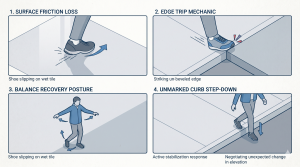
Make absolutely sure you understand the mechanism of injury before drafting a petition.
This is where a surprising number of cases go sideways. I have reviewed petitions where the plaintiff alleged a slip and fall when the facts clearly showed a trip and fall. That distinction is not trivial. It changes the applicable standards, the type of expert testimony you need, and the entire theory of your case.
A slip occurs when the foot loses traction on the walking surface. A trip occurs when the foot strikes or catches on an obstruction or elevation change. A stumble is a near-fall caused by an unexpected surface condition. An air step happens when a pedestrian steps off an elevated walkway onto a lower surface without warning.
Falls from elevations—such as stairways, ladders, or platforms—are a separate category entirely, involving different standards and analyses. Misclassifying the mechanism of injury can derail your case from the start.
The Standard of Care in Slip, Trip, and Fall Cases
Plaintiffs must prove that a walkway hazard violated the standard of care. In Texas and most jurisdictions, this requires showing:
- The condition posed an unreasonable risk of harm
- The defendant knew or should have known of the danger
- The defendant failed to exercise reasonable care to address it
This means it is not enough to show a hazard existed—you must prove the property owner failed to act reasonably to correct or warn of it.
Laws, Codes, and Standards: Understanding the Differences

Nationally recognized consensus standards represent what a reasonable property owner would do to safeguard their walkways.
Laws are enforced by governmental authorities and adjudicated in courts.
Codes (such as building or fire codes) are enforced by local agencies and can result in citations or penalties.
Federal regulations (like OSHA or ADA) govern specific environments and can be enforced administratively or judicially.
Consensus standards (NFSI, ASTM, ANSI) are not laws but are critical in defining what a “reasonable property owner” should do. These standards often form the backbone of civil liability arguments.
Where Laws and Codes Fall Short
Many codes require walkways to be “slip resistant” but fail to define measurable thresholds. This is where standards like NFSI B101.1 and B101.3 become essential—they provide testing methods and objective criteria.
Without measurable standards, proving a surface was “too slippery” becomes speculative and weakens your case.
Top 10 Factors in Slip, Trip, and Fall Cases
- Failure to remove hazards
- Unsafe walkway materials
- Inadequate safety policies or training
- Poor equipment maintenance
- Lack of inspections
- No friction testing
- Damaged floor mats
- Unmarked elevation changes
- Missing or damaged handrails
- Poor safety culture
Most strong cases involve multiple contributing factors rather than a single isolated issue.
Common STF Event Types
Slip, trip, and fall cases vary widely, including:
- Wet floor slips
- Carpet or mat trips
- Sidewalk and curb incidents
- Parking lot hazards
- Unmarked elevation changes
- Construction-related falls
Each event type corresponds to different applicable standards, which must be identified early.
Key Regulations to Know
OSHA
Requires safe walking-working surfaces but does not mandate slip resistance testing.
ADA
Requires stable, firm, slip-resistant surfaces and regulates slopes, transitions, and accessibility features.
International Building Code (IBC)
Requires slip-resistant surfaces and defines requirements for stairs, handrails, and markings.
NFPA 101
Mandates safe, obstruction-free egress pathways and slip-resistant surfaces.
Consensus Standards That Matter
Key organizations include NFSI, ASTM, ANSI, and ASSP.
- NFSI B101 series – friction testing, audits, and safety programs
- ASTM F-1637 – safe walking surface practices
- ANSI/ASSP A1264.2 – slip prevention
Coefficient of Friction (COF)
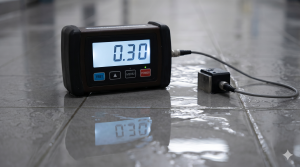
Hard surface flooring should not fall below a 0.40 wet static COF or a 0.30 wet dynamic COF.
COF is the measurable factor in slip cases:
- 0.40 – minimum wet static COF
- 0.30 – minimum wet dynamic COF
Regular testing is critical. Without it, proving compliance or negligence becomes significantly harder.
Building a Strong Case
Start with three questions:
- What type of fall occurred?
- What standards apply?
- Was the standard of care violated?
Focus discovery on inspections, maintenance records, and testing data. Retain experts early to evaluate the viability of the case.

Relentless Representation by Colby Lewis
Why I Wrote This
I developed this perspective after years defending large corporations before shifting to represent injured individuals. Understanding both sides allows me to anticipate defense strategies and build stronger plaintiff cases.
About Colby Lewis
Colby Lewis is the founder of The Law Offices of Colby Lewis in Houston. He has recovered more than $200 million for clients over two decades.
- AV Preeminent™ Rated – highest peer-review rating
- Super Lawyer (10+ years)
- University of Houston Law Center graduate
Contact: 815 Walker St., Suite 452, Houston, TX 77002 | (866) 265-2948 | clewislaw.com
