
Short answer: Design-Bid-Build gives the owner the most control over design and pricing, but it splits responsibility between a separate architect and contractor, which is where most disputes start. Design-Build trades some of that control for speed and a single point of accountability. For most Houston owners, the decision comes down to one question: when something goes wrong, who do you want to be able to hold responsible? Below, we break down both methods, explain how Texas law actually allocates the risk (the part most articles skip), and tell you what to do if a dispute has already begun.
 Choosing a project delivery method is one of the first and most consequential decisions on any construction project in Houston. It shapes your contract structure, your budget certainty, your timeline, and, critically, who is on the hook when there is a defect, a delay, or a cost overrun. The two methods you will encounter most often in Texas are Design-Bid-Build and Design-Build.
We see these projects from a different angle than most. At The Law Offices of Colby Lewis, we are the lawyers owners call after the contract is signed and the building is up, when the foundation cracks, the schedule blows up, or two companies start pointing fingers. We represent owners. Not contractors, not builders, not design professionals. That single focus keeps us clear of the conflicts that tie down firms working both sides of the industry, and it means your interests are the only ones we advance. That vantage point, built over more than 20 years and more than $200 million recovered for our clients, tells us exactly which decisions cause the most expensive problems. The delivery method is near the top of that list.
Design-Bid-Build vs. Design-Build at a Glance
| Factor | Design-Bid-Build (DBB) | Design-Build (DB) |
|---|---|---|
| Contracts | Two separate contracts: one with the architect/engineer, one with the contractor | One contract with a single design-builder who handles both design and construction |
| Owner control over design | High. You direct the design before anyone bids on construction | Lower. The design-builder drives design decisions unless your contract says otherwise |
| Speed | Slower. Construction cannot start until design and bidding are complete | Faster. Design and construction overlap |
| Cost certainty up front | Higher. Bids are based on completed plans | Lower at the outset, but fewer surprises later if the team performs |
| Who bears design-defect risk | The owner and the design professional (see Texas law below) | The design-builder, as a single point of accountability |
| Typical dispute pattern | Contractor vs. designer finger-pointing, with the owner caught in the middle | Owner vs. the single design-builder |
| Change orders | More common when design errors surface during construction | Fewer, because design and build are integrated |
| Best for | Owners who want maximum design control and competitive, fixed pricing | Owners who value speed, simplicity, and one party to hold responsible |
What Is Design-Bid-Build?
Design-Bid-Build is the traditional method, and it works in three sequential phases. First, the owner hires an architect or engineer to design the project. Second, once the design is finished, the owner solicits competitive bids from contractors and awards the job, usually to the lowest responsible bidder. Third, construction begins.
The appeal is control and price certainty. Because you contract separately with the designer and the builder, you influence both phases directly, and contractors bid against a finished set of plans, so you know your number before a shovel hits the dirt. That is why DBB remains common for public projects and for owners who want a high level of design oversight.
Design-bid-build is not new. The leading construction-law treatise notes it has been construction’s traditional and most widely used delivery method for over 150 years, largely because it mirrors the separate licensing of designers, contractors, and trades (Bruner & O’Connor on Construction Law § 2:15). That same separation is the source of its biggest weakness. The method is non-collaborative by design. The contractor is shut out of the design before bidding, so it cannot flag constructability problems or control cost early, and the architect’s role during construction is limited. One commentator quoted in the treatise put it bluntly: traditional design-bid-build is “designed to compartmentalize failure, not avoid it.” Designers are not responsible for means, methods, cost, or schedule. Builders are not responsible for errors in the design. When something fails, each party points at the other, and the owner is left in the middle to sort it out.
Those are exactly the disputes our Houston construction defect attorneys are hired to resolve.
What Is Design-Build?
Design-Build is the more modern approach. Instead of two contracts, the owner signs one contract with a single design-builder, who is responsible for both designing and constructing the project. That party might be a contractor with an in-house design team or a partnership between a builder and a design firm.
The treatise frames the core advantage as “single source responsibility.” Design, construction, and material procurement sit under one contract, which the treatise says minimizes disputes over interpretation of and omissions from the plans precisely because one team owns both halves (Bruner & O’Connor § 2:17). The market has moved with it: design-build has grown from roughly 5% of the U.S. nonresidential construction market in 1985 to nearly 40% (id.). Texas authorizes the method for public projects by statute (Texas Government Code § 2166.2531). Most design-build contracts start from a standard form, such as those published by the Design-Build Institute of America, the AIA, or ConsensusDocs. Treat a standard form as a starting point, not a safe harbor. The risk-allocation edits are what protect you.
The trade-off is control and dependence. You typically have less influence over design decisions, and the design-builder can limit independent oversight unless your contract specifically preserves it. You are also betting heavily on that one team. If they fail to collaborate well internally, the project can suffer delays or quality problems, and you have fewer independent parties to fall back on.
The label does not control. This is the warning that matters most for an owner. As the treatise puts it, “merely labeling a contract as design-build has no effect and is merely form over substance,” and courts look hard at the actual substance when they decide whether true single-source responsibility exists (Bruner & O’Connor § 2:17). The corollary is the trap: the more design decisions you keep control over as the owner, the more design risk you keep with you, no matter what the contract is called. Relying on terms of art like “design-build,” “performance specification,” or “turnkey” is a mistake. What actually decides who pays is the detailed scope of work and the risk-allocation language in your contract. That is exactly the language we read before you sign.
The Part Most Houston Articles Skip: How Texas Law Allocates the Risk
Here is where the delivery method stops being a scheduling question and becomes a legal one. Texas law treats design responsibility very differently depending on who supplied the design, and that difference can decide who pays when a project goes wrong.
Chapter 59: In Design-Bid-Build, the owner generally owns the design risk
Since September 1, 2021, Chapter 59 of the Texas Business and Commerce Code (enacted by Senate Bill 219) provides that a contractor is not responsible for the consequences of defects in plans, specifications, or other design documents that are furnished to the contractor by someone other than the contractor, such as the owner or the owner’s architect. In plain terms: in a typical Design-Bid-Build job, if the owner-supplied plans are flawed, the builder who followed them is generally not on the hook for the resulting defect. The contractor does have a duty to disclose, in writing, defects it knows about or should have caught with ordinary diligence, and it can be liable if it stays silent. By statute, Chapter 59 cannot be waived; a purported waiver is void.
The 100-year-old rule behind Chapter 59: the Spearin doctrine
Chapter 59 did not invent this principle. It brought Texas in line with a rule the U.S. Supreme Court announced more than a century ago in United States v. Spearin, 248 U.S. 132 (1918). In Spearin, a contractor built to government-furnished plans, a relocated sewer failed under storm and tide, and the Court held that the owner that supplied the plans impliedly warranted they were adequate. That warranty, the Court said, “is not overcome by the general clauses requiring the contractor to examine the site, to check up the plans.” A contractor’s duty to review the plans is not a duty to guarantee they will work. If you supplied them, the design risk is presumptively yours. The leading treatise treats Spearin as the foundation of the owner’s implied warranty of the adequacy of its design documents (Bruner & O’Connor § 2:78; see also § 2:10).
The technical distinction that decides who owns the risk: design specs vs. performance specs
Here is the part that decides cases, and the part owners rarely hear until they are in one. The Spearin warranty, and Chapter 59 with it, attaches to design specifications, the kind that tell the contractor exactly what to build and how, down to dimensions and materials. It does not attach to performance specifications, which state the result the owner wants and leave the means and methods to the contractor (Bruner & O’Connor § 2:78; §§ 9:76, 9:78). That distinction usually tracks the delivery method. Design-bid-build runs on design specs the owner furnished, so the owner generally carries the design risk. Design-build runs on the owner’s performance criteria, so the design-builder generally carries it. The same project, described two different ways in two different contracts, can put the loss on two different parties. The wording of your specifications is not a technicality. It is the risk allocation.
The duties do not run one way. Even when the owner furnishes the design, Texas and the common law impose obligations on the owner: an implied duty to disclose information it holds, and mutual duties of cooperation, non-hindrance, and good faith and fair dealing (Bruner & O’Connor §§ 3:34, 9:78). On the other side, the contractor has a duty of inquiry and a duty to disclose defects that are obvious or that it actually knows about, which Chapter 59 builds in. Those duties are where many design-defect fights are actually won or lost.
Why this matters for your choice: Chapter 59 does not apply to Design-Build contracts, because in Design-Build the contractor is the one providing the design. So the same statute that protects a Design-Bid-Build contractor pushes the design risk back onto the design-builder in a Design-Build job. That single legal distinction is one of the strongest reasons an owner who wants accountability leans toward Design-Build, and one of the strongest reasons a Design-Bid-Build owner needs to scrutinize the design contract just as hard as the construction contract.
Certificate of merit: suing the design professional has an extra hurdle
If your problem is a design failure in a Design-Bid-Build project, your claim may run against the architect or engineer, not the builder. Texas adds a gatekeeping requirement there. Under Section 150.002 of the Texas Civil Practice and Remedies Code, a claim against a licensed or registered design professional generally must be accompanied by a sworn certificate of merit from a similarly qualified third-party professional, identifying the specific negligence or errors at issue. It is a real procedural barrier, and missing it can sink an otherwise good claim. In a Design-Build project, your claim typically runs against the single design-builder, which can simplify the path, though professional-negligence rules can still come into play.
The deadlines that can quietly kill your claim
No matter which method you choose, Texas construction claims are governed by hard time limits, and they are shorter than most owners assume:
- Two years for negligence and most Texas Deceptive Trade Practices Act claims.
- Four years for breach of a written contract and most warranty claims.
- A statute of repose under Section 16.009 of the Texas Civil Practice and Remedies Code that cuts off claims against those who built or repaired an improvement 10 years after substantial completion, whether or not the defect has even been discovered yet. For certain residential contractors who provide specific written warranties, recent legislation shortens that window to 6 years.
The repose clock is the dangerous one. It can extinguish your right to sue before you ever notice the damage. If you suspect a problem, the time to call a lawyer is now, not after you have lined up a contractor to fix it.
If your project is a home: the Residential Construction Liability Act
For defects in a residence, Chapter 27 of the Texas Property Code, the Residential Construction Liability Act (RCLA), adds a required pre-suit step. Before filing, the homeowner generally must send the contractor written notice, referencing Chapter 27 and describing the defect in reasonable detail, at least 60 days before suit. The contractor then has a window (within 45 days of receiving the notice) to make a written offer to repair, settle, or both. Skipping this step can derail your case. We walk through this process in detail in our guide to residential construction disputes in Texas, and you can find quick answers in our construction defects FAQ.
Where Disputes Actually Come From
Across both methods, the same handful of issues generate most of the litigation we handle:
-
- Scope and design gaps. Plans that are incomplete or contradictory, especially in Design-Bid-Build, where the designer and builder never sat at the same table.
- Change orders. Who authorized the change, what it costs, and whether it was a true addition or a fix for someone’s mistake.
- Delays. Whose fault, and what the contract says about liquidated damages and extensions of time.
- Defective work. Foundation, framing, roofing, HVAC, plumbing, and water-intrusion problems, plus the fight over whether the cause was design or workmanship.
- Payment. Withheld payment, mechanic’s liens, and retainage disputes.
The delivery method does not eliminate these. It decides how cleanly you can assign responsibility when they happen. That is the lens every Houston owner should use.
Which Option Should You Choose?
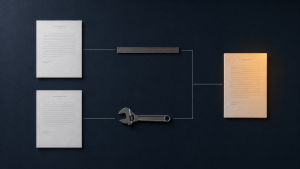 There is no universally correct answer, but there is a correct answer for your project. Choose Design-Bid-Build when design control and competitive, fixed pricing matter most, and you have the time and the appetite to manage two contracts and the relationship between them. Choose Design-Build when speed and a single, accountable party matter more, and you are comfortable trading some design oversight to get them.
Whichever you choose, the contract is where you win or lose the dispute you cannot yet see. The allocation of design risk, the change-order procedure, the dispute-resolution clause, the warranty terms, and the indemnity language are the provisions that decide your exposure. Reviewing them before you sign is far cheaper than litigating them after. Our team handles that review, and when prevention fails, we litigate the result. For business and contract-heavy projects, that work runs through our Houston commercial litigation practice; common questions are answered in our commercial litigation FAQ.
Already in a Dispute? Do These Three Things
- Preserve everything. Contracts, change orders, emails, texts, photos, inspection reports, and payment records. Do not let documents disappear.
- Watch the deadlines. The two-year and four-year limitations periods and the repose statute run whether or not you have acted. For a home, the RCLA notice has to go out before you file.
- Get counsel involved early. The strongest position is built before you have spent money on repairs that can complicate proof of the defect.
Why Houston Owners Call The Law Offices of Colby Lewis
We built this firm on a simple idea: when you are up against a builder, a developer, or an insurance company with deep pockets, you should not have to fight alone. We represent owners, and only owners, so the firm across the table is never also a client of ours. That belief drives all six of our core values, and you can feel them in how we run a case.
- Expect More. We have the resources to take on well-funded opponents and the track record to back it up, with more than $200 million recovered for our clients.
- Integrity. We give you the honest read, even when it is not what you want to hear, so you can make decisions with clear eyes.
- Innovation. We use the strategy and the technology that get results, not the way it has always been done.
- Compassion. A construction failure can threaten your home or your business. We treat that weight as seriously as you do.
- Respect and Success. You are never just a case number here, and our record of winning is the reason clients send us their friends and families.
Founder Colby Lewis is an AV Preeminent rated attorney, a Texas Super Lawyer, a member of the Million Dollar Advocates Forum, and recognized in Best Lawyers’ Best Law Firms. More than that, he is a trial lawyer who knows how the other side thinks. Meet Colby and see why Houston owners turn to us when the stakes are high.
Thinking about a construction project, or already fighting over one? Talk to us before you sign, or the moment a dispute starts. The consultation is free, and your time to act is limited. Contact The Law Offices of Colby Lewis or call (866) 265-2948. From Houston to the Rio Grande Valley, we provide relentless representation for owners across Texas.
Frequently Asked Questions
What is the main difference between design-build and design-bid-build?
In Design-Bid-Build, the owner holds two separate contracts, one with the designer and one with the contractor, and design finishes before construction is bid. In Design-Build, the owner holds a single contract with one party that handles both design and construction. The practical difference is accountability: two parties who can blame each other versus one party who owns the whole project.
Which construction delivery method is faster?
Design-Build is generally faster because design and construction overlap. Design-Bid-Build is sequential, so construction cannot begin until the design is complete and contractors have submitted bids.
Who is responsible for design defects in Texas?
It depends on who furnished the design. Under Chapter 59 of the Texas Business and Commerce Code (effective September 1, 2021), a contractor is generally not responsible for defects in plans supplied by the owner or the owner’s designer, which is the typical Design-Bid-Build setup, though the contractor must disclose defects it knows or should know about. Chapter 59 codifies the U.S. Supreme Court’s Spearin doctrine and does not apply to Design-Build, where the design-builder provides the design and therefore generally carries that risk. This is general information, not legal advice; your specific contract and facts control.
Does the delivery method affect how I sue if something goes wrong?
Yes. In Design-Bid-Build, a design claim may run against the architect or engineer, and Texas Civil Practice and Remedies Code Section 150.002 generally requires a sworn certificate of merit from a qualified professional to bring it. In Design-Build, your claim typically runs against the single design-builder, which can streamline the path.
How long do I have to file a construction claim in Texas?
Generally two years for negligence claims and four years for breach of a written contract, subject to a statute of repose under Section 16.009 of the Texas Civil Practice and Remedies Code that cuts off claims 10 years after substantial completion (6 years for certain warrantied residential work). For a home, the Residential Construction Liability Act usually requires written notice to the contractor at least 60 days before filing suit. Deadlines vary by claim, so confirm yours with an attorney quickly.
Should I have a lawyer review my construction contract before I sign?
Yes. The clauses on design-risk allocation, change orders, warranties, indemnity, and dispute resolution decide your exposure long before any dispute arises. A review before signing is far cheaper than litigation afterward.
Disclaimer: This article provides general information about Texas construction law and project delivery methods. It is not legal advice and does not create an attorney-client relationship. Laws change and apply differently to each situation; consult a licensed Texas attorney about your specific facts. The $200 million figure reflects the total recovered across many matters handled by The Law Offices of Colby Lewis and is not a guarantee or prediction of the outcome of any particular case. A client’s portion of any recovery may be subject to liens, costs, and reimbursement claims. Prior results do not guarantee a similar outcome.
