
Six Bodies of Law, One Gordian Knot
 Ask what “construction law” is and most people guess “contract law for buildings.” That answer misses five-sixths of the field, and the missing five-sixths is usually where an owner’s case is won.
By M. Colby Lewis, Construction Defect Attorney, The Law Offices of Colby Lewis, Houston, Texas
This is Post 3 in our Foundations Series, a plain-English walk through the foundations of construction law for building owners. Post 1, Construction: The 4,000-Year Hallmark of Civilization, covered where building came from. Post 2, Why Construction Disputes Are Unlike Any Other Legal Fight, covered why its disputes are different. This post maps the field itself.
The short version
Construction law is not one body of law. It is at least six, contract, equity, tort, statute, suretyship, and insurance, braided together around a single project and its dozens of parties. The same failed roof can support a breach of contract claim, a negligence claim, a statutory warranty claim, a bond claim, and an insurance claim, all in the same lawsuit. That is why construction litigation has earned a reputation as a legal “Gordian knot,” why Texas and Florida board-certify construction law as its own specialty, and why the field has its own remedies, mechanic’s liens, performance bonds, builder’s risk policies, that exist nowhere else in American law.
What Does “Construction Law” Actually Mean?
Construction law is the law of the entire building process: every legal right, duty, and remedy that attaches to designing, financing, constructing, insuring, and fixing improvements to real property. It blends centuries-old legal theories with modern statutes, all shaped by the customs and realities of the construction industry itself.
The Supreme Court of Florida, which has certified construction law as a formal specialty since 2004, defines the practice as the law “dealing with matters relating to the design and construction of improvements on private and public projects,” including dispute resolution, contract negotiation and administration, construction lending and insurance, licensing, and lien and bond litigation. Texas followed in 2016, when the Texas Board of Legal Specialization recognized construction law as a board-certified specialty of its own. When two of the largest construction markets in America decide a field needs its own certification exam, that tells you the field is real.
It also tells you the field is hard to navigate. Fifty years ago, an engineer-lawyer writing in an American Society of Civil Engineers journal warned that “construction law” is almost a misnomer: not one tidy body of precedent but “a morass of inconsistent legal precedents, each of narrow application, varying significantly from one jurisdiction to another,” because our federal system lets every state write its own contract law. That warning still holds. What is true of a lien deadline in Louisiana may be flatly wrong in Texas, which is one more reason the state where your building sits matters as much as the facts.
The Six Bodies of Law in Every Construction Case
 A construction dispute is rarely argued under one theory. Six distinct bodies of law show up on the jobsite, and a well-built case knows how to use each of them.
- Contract law. The starting point: the express promises in the agreement, the implied obligations the law reads into it, and “expectancy” damages designed to give the innocent party the benefit of the bargain it made.
- Equity. The law’s fairness toolkit: implied contracts, restitution, unjust enrichment, waiver, estoppel, mistake, and good faith. When the paperwork fails, equity lets a court do justice anyway, including paying a party the reasonable value of work performed, what lawyers call quantum meruit.
- Tort law. Duties that exist independent of any contract: negligence, misrepresentation, fraud, interference, and product liability. Tort law matters enormously in construction because so many of the parties who can hurt you, the geotechnical engineer, the window manufacturer, the sub three tiers down, never signed anything with you. Where there is no contractual privity, tort is often the owner’s road in.
- Statutory law. The legislature’s overlay: building codes, mechanic’s lien statutes, prompt payment acts, public bidding laws, licensing requirements, residential warranty statutes, and, critically for owners, statutes of limitations and repose that can kill a valid claim purely because of the calendar.
- Suretyship. The ancient three-party relationship behind payment and performance bonds: owner, contractor, and surety. When a bonded contractor defaults, the bond, not the bankrupt contractor, may be where the money is.
- Related fields. Construction insurance (builder’s risk, commercial general liability, professional liability), real estate, lender liability, and agency law all feed into the mix.
IN PLAIN ENGLISH, FROM COLBY
Think of it like the trades on a jobsite, right? You wouldn’t send a plumber to hang the electrical, and you don’t send one legal theory to do the whole case. When a building fails, I’m walking the site with six toolboxes. The contract is toolbox one, sure. But maybe the engineer who never signed your contract was negligent, that’s tort. Maybe the contractor’s broke but bonded, that’s suretyship. Maybe there’s a policy sitting there that covers exactly this loss, that’s insurance. Here’s the thing: the other side is hoping you only open toolbox one, because toolbox one is the document they wrote. A construction case isn’t about finding the theory. It’s about finding every theory, and knowing which one actually gets your building fixed.
Why Isn’t Construction Law Just Contract Law?
Because buildings are not like anything else people buy, and the law bends to that reality in at least five ways.
You can’t return a building. When goods fail, the buyer rejects them and ships them back; the law of sales calls this the “perfect tender” rule. A defective building cannot be boxed up and returned. So construction performance is judged by a gentler standard, substantial performance: did the contractor deliver essentially what was promised, with damages to fix the shortfalls? No project is ever built exactly to plan, and the law accounts for that.
You can’t repossess a foundation. Because work affixed to real estate cannot be taken back, the law gives unpaid contractors two remedies that exist nowhere else: the mechanic’s lien, a claim recorded against the property itself, and the surety bond claim. Owners must understand both, because liens can cloud your title even when you already paid your general contractor.
The contract never says everything. Courts read implied obligations and warranties into every construction contract based on the customs of the industry: the owner impliedly warrants its plans, the contractor impliedly promises workmanlike performance. Oliver Wendell Holmes explained the mechanism back in 1897: “You always can imply a condition in a contract. But why do you imply it? It is because of some belief as to the practice of the community or of a class.” Industry practice writes terms the parties never typed.
The risks are unique. Differing site conditions, jobsite safety, code compliance, weather, and environmental regulation generate risk-allocation clauses and doctrines with no parallel in ordinary commercial law. So do construction damages: delay damages, extended overhead, acceleration, disruption, and loss-of-use calculations are a specialized accounting discipline of their own.
The industry speaks its own language. Construction has its own vocabulary, deep enough that entire legal dictionaries exist just to define its terms, and courts interpret contracts through that trade language rather than everyday English. A word like “substantial completion” carries pages of legal consequence.
Why Do Construction Cases Turn Into a “Gordian Knot”?
Because the same set of facts routinely supports claims under contract, equity, tort, and statute at the same time, asserted among parties who may or may not have contracts with each other. The tangle is dense enough that the profession reaches for the old metaphor of the Gordian knot, the knot no one could untie. One leaking curtain wall can generate a breach of contract claim against the general contractor, negligence claims against the architect and installer, a warranty claim against the manufacturer, a bond claim against the surety, and coverage litigation with two insurers. Same wall. Five theories. Seven parties.
The courts have been candid about what this does to a case. A federal court explaining why construction contracts are “a separate breed of animal” went further than the famous phrase: general contract principles apply, but “under different operative conditions,” and the law must “carefully discriminate between, say, a contract to construct a home and a contract to construct a 50-story office building; between a contract to build a private driveway and a contract to construct an interchange on an interstate highway.” Paul Hardeman, Inc. v. Arkansas Power & Light Co., 380 F. Supp. 298, 317 (E.D. Ark. 1974). Even inside construction law, one size does not fit all.
And when the parties have both behaved badly, which happens, the frustration shows. A federal appeals court opened one opinion by sighing that “[t]his is one of those messy government [construction] dispute cases in which, during the performance of the contract, neither of the parties acquitted themselves with pure grace,” adding that the record brought to mind “the ancient curse of ‘a plague o’ both their houses.’” Decker & Co. v. West, 76 F.3d 1573, 1577 (Fed. Cir. 1996).
IN PLAIN ENGLISH, FROM COLBY
Why do we plead five theories for one leaking wall? Because at the start of a case, nobody knows which door the recovery walks through. Maybe the contract has a damages cap. Fine, the negligence claim doesn’t. Maybe the contractor’s insolvent. Fine, the surety isn’t. Maybe the architect says “I never had a contract with you.” Fine, his professional duty didn’t need one. I’ll be frank with you, this is exactly where owners without construction counsel get hurt. They hire someone who reads the contract, sees a problem, and stops. The knot has six strands, and you don’t untie it by pulling the one strand the other side left sticking out for you.
What Do Courts Say About Building the “Dream Home”?
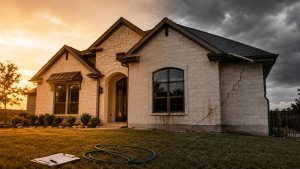 The California Supreme Court said it better than any lawyer’s ad ever could. In a case about a negligently built house, the court wrote that the owners “may have hoped to build their dream home and live happily ever after, but there is a reason that tagline belongs only in fairy tales. Building a house may turn out to be a stress-free project; it is much more likely to be the stuff of urban legends—the cause of bankruptcy, marital dissolution, hypertension, and fleeting fantasies ranging from homicide to suicide.” Erlich v. Menezes, 981 P.2d 978, 987 (Cal. 1999).
The same opinion preserved a lower-court judge’s blunter observation: “No reasonable homeowner can embark on a building project with certainty that the project will be completed to perfection. Indeed, errors are so likely to occur that few if any homeowners would be justified in resting their peace of mind on [its] timely or correct completion.”
Read that again: a state supreme court, describing ordinary construction, in the language of bankruptcy and hypertension. If the highest court in the biggest construction market in America expects errors on every project, a building owner should expect them too, and should know, before the first one appears, what rights the six bodies of law above actually provide.
Who Writes the Contracts Everyone Signs?
Mostly the industry, not the owner, and that history matters. America’s first national standard construction contract, the 1888 “Uniform Contract,” was co-sponsored by the architects’ and builders’ trade associations. The American Institute of Architects published its first Standard Documents in 1911, revised them in 1915 and 1918 after negotiations with contractor representatives, and has kept revising ever since. Legal scholarship counts more than ninety distinct AIA contracts and documents in circulation, with the Associated General Contractors and the Engineers Joint Contract Documents Committee publishing competing families of forms.
Standard forms are not evil. They embody a century of hard lessons, and courts have interpreted their clauses so many times that their meaning is unusually predictable. But notice who sat at the drafting table: architects, contractors, and engineers. Owners, the people who pay for everything, were not a sponsoring party to the 1888 form, and owner interests remain the ones most often traded away in the fine print of risk-shifting clauses, waivers of consequential damages, and dispute procedures.
IN PLAIN ENGLISH, FROM COLBY
Ask yourself one question before you sign a construction contract: who wrote this form? Because I promise you somebody wrote it, and it wasn’t you. These standard documents get negotiated between the architects’ association and the contractors’ association, and then they get handed to you like they came down off the mountain. They didn’t. Every clause in there was fought over by two industry groups, neither of which was sitting in your chair. Does that make the form unusable? No. It makes it a starting point. The waiver clauses, the damage caps, the arbitration provision, all of that is negotiable before you sign and nearly impossible to fix after. Twenty minutes with a construction lawyer before signing costs less than one deposition after. Do the twenty minutes.
Where Is Construction Law Headed? AI on the Jobsite
The newest strand in the knot is technology. Builders now use artificial intelligence for building information modeling, jobsite safety monitoring, code and permit analysis, supply chain tracking, equipment maintenance, and automated document management, and every one of those tools creates new legal questions about who is responsible when the algorithm is wrong. The dispute resolution world is already adapting: JAMS issued dedicated artificial intelligence dispute rules in 2024, and the Royal Institute of British Architects published a full report on AI in practice in 2025. The law has always chased the industry’s technology, from fired brick to steel frame to software, and the chase has not slowed down.
What This Means for a Texas Building Owner
Three practical points fall out of the map. First, never let anyone, especially the party that drafted your contract, tell you your case begins and ends with the contract. The six bodies of law exist precisely because contracts never cover everything, and the theories outside the contract are often the ones with money behind them.
Second, the calendar is a weapon. Statutes of limitations and the statute of repose run whether or not you know the full story, and lien and bond claims carry their own strict notice deadlines. The single most expensive mistake owners make is waiting.
Third, specialization is not marketing fluff; it is a bar-recognized reality. Texas certifies construction law as its own specialty because the field genuinely is its own animal. When your building fails, the fight will draw on contract, tort, statute, suretyship, and insurance law simultaneously. That is the work we do for building owners across Texas, and our Construction Defects FAQ walks through the first steps.
IN PLAIN ENGLISH, FROM COLBY
Let me close the loop on this series so far. Post 1: for four thousand years, the law’s job has been deciding who bears the risk when a building fails. Post 2: the modern industry scattered that risk across dozens of parties and a mountain of paper. And now Post 3: the law answered by weaving six different bodies of law into one field, just to keep up. So what’s the takeaway for you, the owner? Simple. Your building is probably the biggest asset you’ll ever own, and the law protecting it is a specialty for a reason. If something’s wrong, cracked slabs, water where it shouldn’t be, a contractor who stopped returning calls, don’t diagnose it alone and don’t wait on the calendar. Get your documents together and get a construction lawyer’s eyes on it this month. The knot doesn’t untie itself.
Key Takeaways
- Construction law is a blend of at least six bodies of law: contract, equity, tort, statute, suretyship, and related fields like insurance and lender liability. The same failure routinely supports claims under several theories at once.
- Texas (2016) and Florida (2004) formally board-certify construction law as its own legal specialty, official recognition that the field is distinct from general contract or business litigation.
- Construction is judged by “substantial performance,” not the “perfect tender” rule for goods, because buildings cannot be returned. Unique remedies like mechanic’s liens and surety bonds exist because construction work cannot be repossessed.
- Courts read implied warranties and obligations into every construction contract based on industry custom, so the written document is never the whole deal.
- The standard contract forms that dominate the industry were drafted by architect, contractor, and engineer trade associations, not by owners. Review before signing, not after.
- Deadlines are unforgiving: limitations, repose, and lien-notice periods can extinguish strong claims. Timing, not merit, is the most common way owners lose.
Frequently Asked Questions
What is construction law in simple terms?
Construction law is all the law that governs designing, building, financing, insuring, and repairing buildings and other improvements to land. It combines contract law, tort law, equity, statutes (like lien and licensing laws), suretyship, and insurance law into a single field organized around the construction process.
Is construction law the same as contract law?
No. The contract is only the starting point. Construction cases routinely involve negligence and other tort claims against parties who signed no contract, statutory claims under lien, bond, and warranty statutes, surety bond claims, and insurance coverage disputes, plus implied warranties courts read into the contract based on industry custom.
What is “substantial performance” in construction?
It is the standard courts use to judge construction work: a contractor who delivers essentially what was promised has performed, with the owner entitled to damages for defects and omissions, because no building is ever completed in perfect conformance with the plans. It replaces the stricter “perfect tender” rule that applies to sales of goods.
What is a mechanic’s lien?
A mechanic’s lien is a statutory claim that contractors, subcontractors, and suppliers can record against the real property they improved when they are not paid. It exists because construction work cannot be repossessed. In Texas, lien rights carry strict notice and filing deadlines, and owners can face liens from subcontractors even after paying their general contractor in full.
When should a building owner hire a construction lawyer?
Ideally before signing the contract, when risk-shifting clauses can still be negotiated. At the latest, promptly after discovering a defect, nonpayment claim, or dispute, because statutes of limitations, the statute of repose, and lien and bond deadlines run quickly, and early documentation often decides the case.
Coming Next in the Foundations Series
We have now mapped the whole field, and you may have noticed that all six bodies of law orbit the same center of gravity: the contract. Everything on a construction project, the price, the schedule, the risk, the remedies, flows from promises somebody made. So the natural next question is the one Post 4 answers: when does a promise become a contract? A contractor’s bid, an email chain, a handshake in the parking lot, a letter of intent while “the paperwork catches up,” some of those bind you and some don’t, and owners are routinely surprised by which is which. Next time: how construction contracts are actually born, and how to avoid being married before you meant to propose.
The full series lives in our Knowledge Center.
About the Author
- Colby Lewis is a seventh-generation Texan, trial lawyer, and the founder of The Law Offices of Colby Lewis, with offices in Houston, San Antonio, Corpus Christi, McAllen, and Brownsville. Over a two-decade career he has recovered more than $200 million for his clients, including public entities such as Harris County, the Houston Community College system, and dozens of Texas school districts and cities in construction defect and insurance matters. He is AV Preeminent rated by Martindale-Hubbell, has been named a Texas Super Lawyer every year from 2016 through 2026, and was named to the Top 100 Houston Super Lawyers list for 2025 and 2026. He represents building owners, not builders, in construction defect litigation across Texas. Meet Colby, or call (866) 265-2948.
Sources and Authorities
- Paul Hardeman, Inc. v. Arkansas Power & Light Co., 380 F. Supp. 298, 317 (E.D. Ark. 1974)
- Erlich v. Menezes, 981 P.2d 978, 987 (Cal. 1999)
- Decker & Co. v. West, 76 F.3d 1573, 1577 (Fed. Cir. 1996)
- Amendment to the Rules Regulating The Florida Bar, 875 So. 2d 448, 540-41 (Fla. 2004) (definition of “construction law” for board certification)
- Texas Board of Legal Specialization, Construction Law specialty (recognized 2016)
- Oliver Wendell Holmes, Jr., The Path of the Law, 10 Harv. L. Rev. 457 (1897)
- Rubin, 50 Years of Construction Law, 101 J. Constr. Div., ASCE 703 (1975)
- Parker & Adams, The AIA Standard Forms and The Law (1954); Davis, The Role of Non-profits in the Production of Boilerplate, 104 Mich. L. Rev. 1075 (2006)
- Marcus Vitruvius Pollio, de Architectura, Book I (ca. 20 B.C.) (on architects studying law and drafting contracts “with care and precision”)
- JAMS, Artificial Intelligence Disputes Clause and Rules (2024); Royal Institute of British Architects, Artificial Intelligence Report (2025)
*This article is for general information only and is not legal advice. Reading it does not create an attorney-client relationship.
