
So here’s the deal. The things that matter most when you’re picking a truck accident lawyer are these: they actually know trucking law, they’ve got a real verdict and settlement record, they can investigate fast, they understand the federal FMCSA rules cold, they keep you in the loop, they’re honest about the fee, they use good technology to run the case, and other lawyers and judges respect them. That’s it. Below, I walk through every one of those, and I give you the exact stuff to look for, so you can sit across from any lawyer and know — right away — whether they’re the right one before you ever sign anything.
What’s in here
- Why a truck case isn’t a regular car-wreck case
- How my firm handles these
- 1. Real trucking knowledge
- 2. Real trial experience
- 3. The investigators and experts to dig it all up
- 4. Knowing the federal trucking rules cold
- 5. Talking to you like a human and being reachable
- 6. Honest fees and honest costs
- 7. The technology to actually run the case
- 8. A reputation other lawyers respect
- The 7-minute checklist for your first meeting
- Quick FAQ answers
- What to do next
Why a truck case isn’t a regular car-wreck case
Let me be straight with you. A truck wreck is not a regular personal injury case, and you shouldn’t treat it like one. When an 18-wheeler hits you, you’re not dealing with one driver and one insurance policy — you’ve got the driver, the trucking company, whoever loaded the cargo, sometimes the company that built the equipment, and on top of all that, a whole stack of federal regulations that most regular lawyers never touch in their entire career. And here’s why that matters to you: the lawyer you pick decides how much evidence gets saved, how hard they go after the people responsible, and at the end of the day, how much money actually ends up in your pocket.
The eight things below? They come from looking hard at what separates the lawyers who win the big verdicts from the ones who grab a quick, cheap settlement and move on. Use this as your checklist before you walk into that first meeting. That’s what it’s for.
How my firm handles these
At The Law Offices of Colby Lewis, I treat every truck case like it’s a person, not a file number — because it is. You get me, the lawyer steering the case, not a rotating cast of people you’ve never met handing you off to each other. And I’ll tell you, in a serious truck case, that hands-on thing is a real advantage. It matters.
We’ve recovered over $200 million for accident victims across Texas, and we work on a no-win, no-fee basis — which means you pay nothing unless we get you money. Why does that matter? Because that’s the wall that stops a lot of badly hurt people from ever getting the lawyer they deserve, and I’m taking that wall down. You don’t pay me out of pocket. You pay me out of what I win for you, or you don’t pay me at all.
We know both the Texas-specific liability rules and the federal FMCSA rules that govern these big commercial trucks. From the very first phone call all the way through trial, we run every stage of it: we lock down the evidence fast, we line up the experts, we push back on the insurance defense, and when it’s time, we take it into the courtroom and fight. If you want a lawyer who gives you personalized legal care and a real track record, the eight traits below are exactly why we’re built to give you both.
1. Real Trucking Knowledge
What “real trucking knowledge” actually means
Here’s what it means, plain: a lawyer who actually focuses on commercial truck crash cases and understands the federal, state, and regulatory rules that drive this kind of litigation — the FMCSA rules, who’s on the hook as a carrier, and how you sort out fault when there are five different parties pointing fingers at each other.
Not every personal injury lawyer is built to handle a semi or an 18-wheeler case. The regulatory complexity in trucking is way past what regular car-wreck practice covers, and a lawyer without that foundation? They’ll miss the violations, they’ll misread the evidence, and they’ll undervalue your case without even knowing they did it. That’s the danger.
Generalist vs. truck specialist — here’s the difference
| What you’re comparing | General PI lawyer | Truck accident specialist |
|---|---|---|
| Regulatory knowledge | Basic state traffic law | Full FMCSA, DOT, and HOS rules |
| Evidence they go after | Police report, photos | Black box, driver logs, inspection records |
| Who they pin liability on | Driver, maybe the owner | Driver, carrier, broker, shipper, manufacturer |
| Expert network | General medical experts | Accident reconstruction, CMV safety, economics |
| Insurance defense experience | Standard carrier negotiations | National trucking insurer litigation tactics |
Look, picking a specialist over a generalist is one of the highest-leverage decisions you can make when you’re badly hurt and the people on the other side have deep pockets. A lawyer who lives in truck and 18-wheeler cases knows where the violations hide and what the case is really worth — and that consistently turns into a bigger recovery than a generalist gets on the same claim. Same case, more money, just because of who’s holding it.
2. Real Trial Experience
What trial experience really means in a truck case
Trial experience means the lawyer has actually taken civil cases all the way to a verdict — they know how to put on evidence, argue to a jury, examine witnesses, and handle the appeal if settlement talks fall apart. Not “we usually settle.” Actually tried.
And here’s the part people don’t realize: the insurance companies behind these trucking carriers know exactly which lawyers go to trial and which ones fold. They keep a list, basically. A lawyer with no real trial experience is sending a signal to the other side — low offer’s fine, they’ll take it eventually. A trial-ready lawyer flips that whole thing on its head. Now the insurance company has to ask: what happens if this goes in front of a jury? That question alone is worth money to you.
3. The Investigators and Experts to Dig It All Up
Why investigation decides what your case is worth
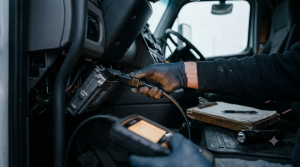
This one means the lawyer can grab and analyze the critical evidence fast — driver logs, electronic logging device data, the black box recordings, witness statements — before the trucking company or the insurer has a chance to change it or make it disappear.
And I need you to hear this, because it’s the part that costs people their cases: truck evidence has a short shelf life. The electronic control module data gets overwritten. Logbooks get “corrected.” Surveillance footage records over itself on a loop, days, sometimes hours. A lawyer with in-house investigators and real expert relationships can move within hours of you hiring them — before that stuff is gone. A lawyer who has to go find those people after the fact? By the time they’re ready, the evidence already evaporated.
The resources the top truck firms actually deploy
- Accident reconstruction experts who can model the speeds, the braking distance, the physics of the impact, off the physical and digital data
- Commercial vehicle safety experts who can spot the FMCSA violations buried in the inspection and maintenance records
- Medical experts who can document what caused the injury, what your future care costs, and what disability you’re looking at
- Economic loss experts who put a number on your lost earning power — huge if you’re permanently hurt
- Evidence preservation — legal hold letters that go out to the carriers and insurers immediately, not next month
Why this beats the trucking company’s defense
Here’s the thing you’re up against. The trucking companies hire big defense firms and send their own investigators to the crash scene right away — sometimes while you’re still in the ambulance. A lawyer without the same firepower walks into the case already behind. Firms with real investigative muscle — the kind that locks down the evidence before it disappears — are in a far better spot to dig up the carrier negligence hiding in the maintenance history and the driver qualification files. That’s where the case usually is.
My approach to evidence preservation after a truck accident is simple: move first. We dispatch investigators and fire off the litigation hold notices before the trucking company’s legal team gets to start spinning the story their way. First mover wins the evidence. So we move.
4. Knowing the Federal Trucking Rules Cold
What FMCSA knowledge means for your case
FMCSA compliance is the set of rules from the Federal Motor Carrier Safety Administration — truck maintenance standards, driver qualification files, hours-of-service records, how cargo gets handled. All of it matters for proving who’s liable in a commercial truck crash.
More than four million people hold a commercial driver’s license in the United States, according to the Federal Motor Carrier Safety Administration (FMCSA). And governing all of them is this giant federal regulatory framework that most personal injury lawyers never even open. So ask yourself: if a lawyer can’t read a driver’s hours-of-service log, or can’t pull up a carrier’s CSA safety score and tell you what it means — how are they going to prosecute your case? They can’t. That’s the honest answer.
Where the violations are usually hiding
- Hours-of-service violations — drivers blowing past the legal drive-time limits, which is how you get a fatigued driver and a wreck
- Logbook falsification — paper or electronic records doctored to cover up those hours violations
- Driver qualification failures — background checks that never got done, expired CDLs, prior violations nobody disclosed
- Maintenance gaps — skipped inspections, repair orders that got ignored, brake certifications that are garbage
- Cargo securement violations — freight loaded wrong or not tied down, which is how you get rollovers and road debris
Why the regular guys miss this
A general personal injury lawyer pulls the police report and the medical records and calls it a day. What they never do is request the carrier’s FMCSA inspection history, the driver qualification file, the drug and alcohol testing records. And here’s the kicker — those documents are usually where the most powerful liability evidence in the whole case is sitting. A firm with a real trucking practice, like my team of Houston truck accident attorneys, knows to identify and subpoena the right records early, so the violations get uncovered and locked in — either for settlement leverage or for trial. You can’t use what you never asked for.
5. Talking to You Like a Human and Being Reachable
What good communication actually looks like
This one means you get timely updates, you get plain-English explanations of the strategy and the risks, and you get real access to the lawyer running your file — so you can make smart decisions at every step instead of being left in the dark.
Because look, when you’re recovering from a serious injury, silence is its own kind of stress. You’re sitting there wondering what’s happening with your life. The good truck lawyers build a communication plan right into how they represent you, so you always know what’s going on and why. That’s not a nice-to-have. That’s part of the job.
What great communication looks like
- One point of contact, plus direct access to the lawyer when there’s a real decision to make
- Updates that come to you, tied to the milestones — investigation, demand, litigation — not you chasing them
- Plain-language explanations of the FMCSA issues, the insurance strategy, the timeline
- A secure client portal for your documents, messages, and case status
- Response-time standards — like 24-hour return calls — actually written into your retainer
Questions to ask
- “Who’s my main contact, and how often will I hear from you?”
- “Do you have a secure portal, or what’s the best way to reach you?”
- “When a big decision comes up, can I actually get the lead lawyer on the phone?”
6. Honest Fees and Honest Costs
What “transparent fees” means
Transparent contingency fees means two things: you only pay if the case recovers money, and your agreement spells out clearly — the percentage, the litigation expenses, and how the costs get handled at each phase, whether that’s pre-suit, litigation, trial, or appeal. No mystery.
And I’ll be frank with you — getting this clear up front is what keeps it from turning into a fight later. The good firms walk you through it line by line, especially in truck cases, where the expert witnesses and the discovery costs can get real significant, real fast.
What to look for
- A written contingency agreement with plain-English explanations — not legalese you can’t parse
- A clear cost policy — who fronts the expert fees, the records, the depositions
- Examples of cost ranges for a typical trucking investigation, so you’re not surprised
- No pressure — they give you time to read it and ask questions before you sign anything
Red flags
- Vague or verbal promises that never make it into the written agreement
- They won’t even estimate the cost categories for you
- Fees that move mid-case with no documented reason for the change
7. The Technology to Actually Run the Case
What “advanced technology” means for your result
This means the firm has systems for fast evidence intake, for decoding the ELD and ECM data, for laying out a timeline you can actually see, for secure communication with you, and for handling e-discovery — all of which streamlines a complicated truck case without sacrificing accuracy. It’s the difference between a firm that’s organized and one that’s drowning.
The technology the top firms use
- ELD/ECM data analysis tools to pull out speed, braking, and hours-of-service compliance
- Digital evidence mapping that lines up the logs, GPS, cell data, and dashcam footage side by side
- Secure document portals with bank-grade encryption
- Litigation project management to track every task, deadline, and expert deliverable
- AI-assisted review of huge stacks of maintenance and safety records, to spot the anomaly a human eye would miss
Why it matters to you
- They find the liability theories faster
- Fewer missed deadlines, stronger discovery compliance
- Clearer, more convincing presentations to the insurers and, if it comes to it, the jury
8. A Reputation Other Lawyers Respect
What peer recognition tells you
Peer recognition is how other lawyers and judges rate a lawyer’s ethics, skill, and results — and it shows up in leadership roles, speaking invitations, publications, and credible ratings and honors. It’s the reputation you can’t buy, because it comes from the people who watch you work.
Signs of a respected truck lawyer
- Leadership in trial lawyer associations or trucking law sections
- Getting invited to teach CLEs on commercial vehicle litigation
- Consistent, credible recognitions and high professional ratings
- Published articles, case studies, or amicus briefs on trucking safety
Why it helps your case
Here’s why you should care about any of that. The insurers track which firms set the verdict records and which ones lead in this field. A recognized lawyer walks in carrying credibility — and that credibility turns into leverage at the settlement table and persuasion in the courtroom. Same facts, but the name on the pleading moves the number. That’s just how it works.
The 7-Minute Checklist for Your First Meeting
You don’t need a law degree to vet a lawyer. Walk in with this and you’ll know inside seven minutes:
- Bring: police report, photos and videos, medical records, your employer’s wage info
- Confirm: the investigative and expert resources, and their plan to preserve evidence immediately
- Review: how often they’ll communicate, and who actually runs your case day to day
- Clarify: the contingency fee, the costs, and who fronts the experts
- Decide: does this lawyer explain the strategy clearly and make you feel confident? Trust your gut on that one
Quick FAQ Answers
 Do I really need a truck accident lawyer, or will a car-crash lawyer do?
A truck crash drags in FMCSA compliance, multiple corporate defendants, and technical data like the ELD and ECM downloads. A lawyer who actually does truck cases is better equipped to find the violations and get you the full recovery. A regular car-wreck lawyer, with the best intentions, just isn’t set up for it.
How fast should I hire a lawyer after a truck accident?
Right away. I mean it. The critical data — the ECM, the dashcam, the surveillance — can get overwritten in a matter of days. Early legal hold letters and getting an investigator out there fast is what protects what your case is worth. Wait, and you may be protecting nothing.
What if I was partly at fault?
Maybe — and this is where Texas has a hard line you need to know about. Texas runs on what’s called modified comparative fault, the 51% bar (that’s Civil Practice & Remedies Code § 33.001). If you’re 50% or less at fault, you can still recover, but your money gets cut by your share of the blame — you’re 20% at fault, your recovery drops 20%. Cross over to 51% or more, though, and you recover nothing. Zero. Here’s the thing: fault is almost always a fight, and the insurance company’s whole game is to pin as much of it on you as they can to shove you over that line. So don’t ever talk yourself out of a claim by guessing at your own fault. Let a lawyer look at it first.
How long do I have to file a truck accident claim?
In Texas, you generally have two years from the date of the injury to file a personal injury claim (Civil Practice & Remedies Code § 16.003). But — and this is the one that catches people — there are exceptions that can shrink that clock fast. If a city, county, or other government vehicle was involved, you have to give formal notice quickly: the Texas Tort Claims Act sets six months, but a lot of cities cut it way shorter by charter. Houston, for example, requires notice within 90 days. Blow that notice window and it won’t matter that you still had two years left — your claim against the government can be dead. There are other wrinkles too, like minors and the discovery rule. So don’t guess on the deadline. Call a lawyer right away so you don’t lose the right to bring it at all.
What’s my truck accident case worth?
It depends on the strength of the liability, your injuries, your future medical needs, your lost earnings, and the venue. I’m not going to throw a number at you to make you feel good. What I’ll tell you straight is that strong FMCSA violations and clear corporate negligence usually push the settlement leverage up.
Will my case settle, or go to trial?
Most of these resolve in a settlement. But the serious ones have to be built trial-ready to command full value — and that’s the whole point. The insurers pay more when they know your lawyer can actually win in front of a jury. Build it for trial and you usually don’t have to have one.
Who pays for the experts and the litigation costs?
The good firms advance the reasonable case costs — experts, depositions, records — and then recover them out of the settlement or verdict, per your retainer. You shouldn’t be writing checks for experts while you’re hurt. Get that confirmed up front.
What should I bring to my consultation?
Police report, medical records and bills, photos and videos, witness info, your insurance details, your employment and wage documents, and any messages you’ve had with the insurers. The more you bring, the faster I can tell you what you’re working with.
What if the trucking company is out of state?
Doesn’t matter as much as you’d think. Jurisdiction and venue can still be proper where the crash happened or where the defendants do business. Experienced truck lawyers go up against out-of-state carriers all the time. It’s routine.
What happens if evidence got destroyed?
Then your lawyer can go after sanctions or an adverse inference for what’s called spoliation — basically, the court can hold it against them for letting it disappear. But acting fast is still your best shot at making sure the key data gets preserved before it’s altered or gone.
What to Do Next
If you or someone you love got hit by a semi or an 18-wheeler, don’t sit on it. A fast, trucking-focused investigation can be the whole difference between a lowball offer and a recovery that actually changes your life. That’s not a sales line — that’s the evidence clock, and it’s already running.
- Free, no-obligation consultation
- No win, no fee — you pay nothing unless we recover for you
- Hands-on advocacy from the investigation all the way through verdict
Call The Law Offices of Colby Lewis — (866) 265-2948 — to talk to a truck accident lawyer about your case now. The consultation is free, and we’re here for you.
One last thing, and then I’ll let you go
Picking the right truck accident lawyer is a leverage decision. That’s really what it is. Put your weight on the things that matter — real trucking knowledge, a proven trial record, deep investigative resources, FMCSA mastery, straight talk, honest fees, good technology, and a reputation other lawyers respect. Use the checklist, use the FAQ, and move quickly to protect the evidence that drives what your case is worth. Do that, and you’ve already done the hardest part right.
Disclaimer: This article is for information only and is not legal advice. Talk to an attorney about your specific case.
About The Law Offices of Colby Lewis
 The Law Offices of Colby Lewis is a Texas plaintiff’s firm built on one idea: every case is personal. Founder Colby Lewis has been fighting for injury victims for over 20 years and is recognized as an AV Preeminent™ Super Lawyer™. We represent people and businesses in personal injury, insurance claims, construction defect, and commercial litigation — in Houston, San Antonio, Corpus Christi, McAllen, Brownsville, and across Texas. We’ve recovered over $200 million for our clients, and we take every case the way we’d want our own family’s handled: with dignity, respect, and relentless determination.
Recognitions include AV Preeminent (Martindale-Hubbell), Texas Super Lawyers, Best Lawyers and Best Law Firms 2026, the Million Dollar Advocates Forum, Top 100 Trial Lawyers, and an Avvo 10.0 rating. Meet Colby.
Talk to us
Website: clewislaw.com • Free consultation: clewislaw.com/contact • Phone: (866) 265-2948
Connect: Facebook • X • LinkedIn • Instagram • YouTube
Our offices
Houston (Main Office): The Esperson Building, 815 Walker St., Suite 452, Houston, TX 77002 — (866) 265-2948
San Antonio: Spectrum Court, 12703 Spectrum Drive, Suite 100, San Antonio, TX 78249 — (866) 265-2948
Corpus Christi: 4141 S. Staples Street, Suite 210, Corpus Christi, TX 78411 — (866) 265-2948
McAllen: 4228 N McColl Road, McAllen, TX 78504 — (866) 265-2948
Brownsville: 114 West Jefferson Street, Suite A, Brownsville, TX 78520 — (866) 265-2948
