
Filing a rideshare accident lawsuit in Texas requires moving fast, preserving the digital evidence buried inside the app, and working through layered insurance coverage that most car-wreck cases never involve. The seven steps below show you how to begin a legal claim after an Uber or Lyft rideshare accident in Texas, from securing app data in the first hours to using Texas-specific deadlines and coverage rules that can protect your recovery.
Table of Contents
- The Law Offices of Colby Lewis’s Approach to Rideshare Accident Claims
- What Is a Rideshare Accident Claim?
- 1. Preserve App and Phone Data Immediately
- 2. Get Prompt Medical Care and Documentation
- 3. Identify the Applicable Insurance Period
- 4. Hire an Attorney Who Handles Rideshare Cases
- 5. Build a Strong Liability and Damages File
- 6. Know the Texas Laws and Deadlines That Apply
- 7. Build the Case as if It Will Go to Trial
- FAQs: Texas Rideshare Accidents
- About The Law Offices of Colby Lewis
The Law Offices of Colby Lewis’s Approach to Rideshare Accident Claims
The Law Offices of Colby Lewis represent people hurt in Uber, Lyft, and other rideshare crashes across Texas. The approach is simple, and I mean simple: every client gets aggressive, personal advocacy, not a case number. We build every rideshare claim as if trial starts tomorrow, because that preparation, more often than not, is exactly what moves an insurance company toward a fair number.
Here’s the honest part nobody likes to say out loud. Every case is different. What a rideshare claim is worth depends on who was at fault, how badly you’re hurt, and which insurance coverage applies, and no lawyer can promise you a result on day one. We’re trading an injury for money. This is not a jackpot. I’d rather tell you that up front than sell you a billboard number.
We work on a contingency fee, which means no attorney’s fee unless we recover for you. One straight word on that: in a contingency-fee case, clients are generally responsible for case expenses, the filing fees, the records, the experts, and your written fee agreement lays out the details, including whether the fee is figured before or after expenses come out. Ask about it before you sign.
Here’s the deal. A rideshare crash is not a normal car wreck, and I want you to understand why, because it changes everything about how you protect yourself. Think about it: the evidence that wins your case isn’t sitting in a glove box, it’s sitting inside an app on somebody’s phone. The insurance comes in layers that switch on and off depending on what the Uber or Lyft driver was doing the second you got hit. And the clock, the clock starts running the day of the wreck, whether you know it or not. So these are the 7 steps I walk my clients through after an Uber, Lyft, or other rideshare accident here in Texas, from locking down that app data in the first few hours to hitting the Texas deadlines that can wipe out a claim if you blow past them. Let’s go through it.
What is a rideshare accident claim?
A rideshare accident claim is a claim for injuries or damage from a crash involving a vehicle operating through a transportation network company, a TNC, like Uber or Lyft, whether you were a passenger, a pedestrian, a cyclist, or another driver. That’s the textbook version. In Texas, these companies are regulated under Texas Occupations Code Chapter 2402, and that’s the law that decides what insurance they have to carry.
Now, here’s the thing I tell everybody up front. Every single case is different. What you recover depends on who was at fault, how bad you’re hurt, and which insurance actually applies. There’s no “average” result, there’s no typical number, and any lawyer who promises you an outcome on day one, right, you should walk the other way. We’re trading an injury for money. This is not a jackpot. I just want you going in with your eyes open.
1. Preserve App and Phone Data Immediately
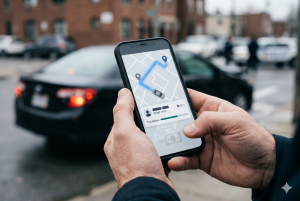 So, step one. Digital evidence is the backbone of a rideshare claim, and I mean the backbone. In a regular fender-bender, the proof is right there on the road. In a rideshare case, the best proof is living inside an app, and here’s the part that scares me: it can get deleted on a routine schedule in a matter of days. Gone. Like it never happened.
What am I talking about when I say digital evidence? Time-stamped location trails, route logs, the ride receipt, the in-app messages, any in-vehicle camera footage. All of it together tells us one thing that matters more than almost anything else: the driver’s app status at the exact moment of impact. And that status is what decides which insurance policy applies and how much coverage is sitting there for you.
Here’s what I can do, fast. I send a formal evidence preservation letter to Uber or Lyft, and that puts the company on legal notice to hold onto data they’d otherwise purge. Preservation letters and subpoenas, those are standard tools, that’s how we lock the evidence down before it disappears.
Key digital evidence to secure after a rideshare accident:
| Evidence Type | Why It Matters |
|---|---|
| Trip records and ride receipts | Confirms the ride was active and links the driver to the TNC policy |
| GPS and route data | Reconstructs speed, path, and timeline of the crash |
| Driver communication logs | Documents in-app messages before or after impact |
| In-car camera footage | Provides video of the incident |
| Driver app status logs | Determines which insurance period governs the claim |
I’ll say it plainly: wait even a few days, and you can lose the most persuasive data in your whole case. So move.
2. Get Prompt Medical Care and Documentation
Step two, and this one’s about you, not just the case. Prompt medical treatment protects two things at once, your health and your claim. Why does it protect the claim? Because every gap in your care gives the insurance company an opening to stand up and say, well, he wasn’t really hurt, or, that injury came from something else. Don’t hand them that.
Go get checked out right after the crash, even if you feel fine. Especially if you feel fine. Concussions, soft-tissue injuries, internal bleeding, a lot of that doesn’t show up for hours or even days. Medical documentation, that’s your evaluations, your treatment notes, your imaging, your prescriptions, your billing statements. Strung together, it’s a verifiable, chronological record of what happened to your body and what it cost.
And do me a favor, keep a personal injury journal. Write down the daily symptoms, the things you can’t do anymore, how it’s hitting your life. Texas law lets you recover economic damages, that’s your medical bills and lost wages, and non-economic damages, that’s the pain, the suffering, the loss of enjoyment. Your own notes, written down as it’s happening, that’s some of the strongest proof there is for that second category.
Medical records to keep:
- Emergency room or urgent care records
- Physician evaluation and diagnosis notes
- Imaging results (X-rays, MRIs, CT scans)
- Specialist referrals and treatment plans
- Physical therapy and rehabilitation notes
- Prescription and pharmacy records
- All billing statements and insurance EOBs
- Records of missed work or reduced capacity
3. Identify the Applicable Insurance Period
 Okay, step three, and this is the one nobody understands until somebody explains it, so let me explain it. Rideshare insurance is not one policy. It’s a set of coverage periods that switch on based on what the driver’s app was doing when the wreck happened. Get the period wrong and you can leave a fortune on the table. It’s one of the most common, most expensive mistakes people make.
Let me put it the way I put it to clients. You know why you see those billboards? If a regular car hits you, the other side might have thirty grand. If an 18-wheeler hits you, now you’re looking at a million. Same idea here. The driver’s app status at the moment of impact decides which insurer you’re dealing with and how big the policy is. Texas spells all this out in Occupations Code Chapter 2402.
Texas rideshare insurance coverage periods:
| Period | Driver Status | Coverage Source | Texas Minimum Limits |
|---|---|---|---|
| Period 0 | App off | Driver’s personal auto insurance only | Varies by personal policy |
| Period 1 | App on, waiting for a request | TNC contingent liability coverage | $50,000/person; $100,000/incident; $25,000 property |
| Period 2 | Request accepted, en route to passenger | TNC commercial policy | $1,000,000 liability, plus UM/UIM |
| Period 3 | Passenger in the vehicle | TNC commercial policy | $1,000,000 liability, plus UM/UIM |
Those are the minimums Texas law requires under Texas Insurance Code Chapter 1954 (sections 1954.052 and 1954.053). The $1 million applies from the moment the driver accepts the trip request through drop-off. General information, not a promise of what’s available in your specific case.
Now here’s the question everybody should ask and almost nobody does: who does that money actually pay? Because the big policy is liability coverage, and liability coverage pays the people the rideshare driver hurts. So if your Uber or Lyft driver causes the wreck, that policy is there for you as the passenger, and for anybody else they hit, another driver, a pedestrian, a cyclist. What it does not do is pay the rideshare driver’s own injuries when the rideshare driver is the one who caused it. Liability never pays the at-fault person.
Now flip it. If somebody else, a non-rideshare driver, causes the crash, you go after that at-fault driver’s insurance first. And if they’ve got no insurance or nowhere near enough, the rideshare company’s uninsured/underinsured motorist coverage can step in, and that protects you whether you were riding as the passenger or you were the rideshare driver, during the ride. Same with personal injury protection where it applies, it can help with medical bills no matter who was at fault. Bottom line: which seat you were in, and who caused it, decides which policy pays you.
So your role in the crash matters too, right? If you were a passenger or a third party and you got hurt during Period 2 or Period 3, you can reach that full one-million-dollar commercial policy, that’s the strongest spot to be in. If you got hit during Period 1, when the app’s on but nobody’s been picked up yet, the coverage is thinner, it’s contingent, and that’s exactly why documenting the driver’s app status becomes so important.
Here’s your homework at the scene, if you can do it safely. Get the driver’s full name, their license number, their insurance card, and confirmation of their app status from the rideshare company’s in-app incident report. Get all of it.
4. Hire an Attorney Who Handles Rideshare Cases
Step four. And look, I’m a lawyer telling you to hire a lawyer, I get how that sounds, so let me make it concrete. General car-accident experience is not the same thing as handling rideshare claims. These cases live or die on subpoenaing app data, figuring out which coverage period applies, and wrestling with multiple insurance layers and the TNC contracts underneath them. Somebody who does these regularly knows how to move on the evidence and the coverage fast, before it’s gone.
Here’s how I get paid, plainly. A contingency fee means I only get paid if your case settles or wins. You pay no attorney’s fee up front. And let me tell you what a fiduciary is, because that’s what I become for you. It means I have to put your interest ahead of mine. You come first. That’s the deal.
One honest word on costs. In a contingency-fee case, the attorney’s fee is a percentage of the recovery, and clients are usually responsible for case expenses, the filing fees, the records, the experts. Whether you owe those expenses if there’s no recovery, and whether the fee gets figured before or after expenses come out, all of that is written into your fee agreement. Ask about it before you sign. Any good lawyer will walk you through it without flinching.
Questions to ask when you’re vetting a rideshare attorney:
- How many rideshare cases have you handled to resolution?
- What’s your approach when the insurer disputes which coverage period applies?
- Do you have experience subpoenaing TNC app data and GPS records?
- Have you handled cases with uninsured or underinsured drivers?
- What’s your fee structure, and what costs am I responsible for, win or lose?
5. Build a Strong Liability and Damages File
Step five. Here’s the thing about your case: it’s only as strong as your evidence file. That’s it. A complete, organized file lets the insurance company, and a jury if it comes to that, see the fault clearly and understand the full scope of what you lost. A messy file lets them squint and lowball you.
So what is a liability and damages file? Two stacks. One stack proves who caused the crash and why. The other stack proves how it hurt you, financially and physically. Let me give you both.
Core liability evidence:
- Police crash report, the Texas Peace Officer’s Crash Report, Form CR-3, and any citations
- Photos and video of the scene, the vehicles, the debris, the injuries
- Witness names, contact info, and statements
- Rideshare app data: trip records, GPS trails, driver status logs, in-app messages
- Vehicle data: event data recorder downloads, repair estimates, post-crash inspections
- Weather, lighting, and traffic-control documentation; 911 audio where we can get it
Core damages evidence:
- Complete medical records and billing from every provider
- Proof of lost wages and reduced earning capacity: employer letters, pay stubs, tax returns
- Out-of-pocket costs: transportation, home care, medical devices, co-pays
- Pain and suffering evidence: that injury journal, recovery photos, family impact letters
- Expert reports where it makes sense: accident reconstruction, life-care planning, vocational evaluation
And here’s how we actually put the demand together, step by step:
- Liability summary, a clear fault story tied straight to the exhibits
- Injury and treatment timeline, in order
- Economic damages ledger, with totals and the source documents behind them
- Non-economic damages, tied to the medical findings and your daily life
- Coverage analysis, naming every insurance period and limit that applies
- The demand figure, with a defined response window and delivery instructions
One more thing I always do: I figure out the insurance company’s defenses before they raise them, the pre-existing condition argument, the treatment-gap argument, the shared-fault argument, and I answer them head-on with medical opinions, consistent care, and objective testing. Don’t wait to get punched. Block it first.
6. Know the Texas Laws and Deadlines That Apply
Step six, and pay attention here, because Texas has its own rules, and some of them will end your case if you sleep on them.
The statute of limitations. In Texas, you generally get two years from the date of injury to file a personal injury lawsuit. The property-damage piece from that same crash? Also two years, under Texas Civil Practice and Remedies Code § 16.003. Now, if you’ve read one of these articles written for California, you might think property damage gets three years. Not here. In Texas, both are two. There are a few narrow exceptions and tolling situations, so confirm your exact deadline with a lawyer, but plan around two years.
Comparative fault, and this is a big one. Texas uses what’s called modified comparative fault, the “51% bar,” under Civil Practice and Remedies Code § 33.001. Here’s what that means for you. If you’re 50% or less at fault, you can recover, just reduced by your share. If you’re 51% or more at fault, you get nothing. Zero. That’s stricter than California, where somebody can recover even if they’re mostly to blame. So in Texas, nailing down fault early matters even more, because crossing that 51% line erases the whole claim.
Claims against a government entity. Say a city bus is involved, or a government vehicle, or a busted-up public roadway. Now the Texas Tort Claims Act is in play, and the deadlines get short and mean. The state-law notice deadline is six months. But, and here’s the trap, Texas cities are allowed to set shorter deadlines by charter or ordinance, and a lot of them do. Houston wants notice within 90 days. Austin wants it within 45. That’s it. See Civil Practice and Remedies Code § 101.101. You can blow a government claim by missing the city’s deadline even though the two-year statute hasn’t run yet. So if a government entity might be involved, you call a lawyer immediately, not next month.
Crash reporting. Texas got rid of that old CR-2 “blue form,” that went away September 1, 2017. When law enforcement shows up and investigates, the officer files the Texas Peace Officer’s Crash Report, Form CR-3. If no officer investigates and the crash caused injury, death, or real property damage, Texas drivers still have a duty to report it to law enforcement under the Transportation Code. Bottom line, get a copy of that crash report. It’s key liability evidence.
So here’s your Texas action list:
- Make sure law enforcement gets called and a CR-3 crash report gets created. Write down the report number.
- Figure out whether the crash happened during Period 2 or 3, when that $1 million TNC coverage kicks in.
- Calendar the two-year statute of limitations, and confirm whether any exception or tolling changes it.
- Document any shared-fault issues early, because Texas bars you completely above 50% fault.
- If a government vehicle or a public roadway hazard was involved, preserve your evidence and calendar the shortest possible government-claim deadline, as little as 45 days in some cities.
When you’re not sure, move early. Preservation letters, prompt care, timely filings, that’s what builds leverage and keeps you out of avoidable coverage fights.
7. Build the Case as if It Will Go to Trial
Step seven, the mindset that ties it all together. Insurance companies move when they see a file that’s ready for a courtroom. So from day one, you build it that way. That posture drives the fair settlement, and it protects you if you actually have to go.
Let me tell you why this works, because it’s just human nature, or company nature. A corporation doesn’t have a heart. It doesn’t have blood. It doesn’t have a soul. All a corporation has is money. And the only way you get a corporation to do the right thing is to be genuinely ready to make it pay. A time-limited demand, that’s a settlement offer that gives the insurer a defined, reasonable window to respond. If they unreasonably refuse a fair demand inside the policy limits, they can face extra exposure under Texas law, and funny thing, that tends to motivate a faster, fuller resolution.
Steps that make a case stronger:
- Send preservation letters to the TNC and to any third party with relevant data, garages, body shops, camera owners
- Retain the experts you need early: accident reconstruction, biomechanical, medical, life-care, vocational
- Take sworn statements or depositions when liability or app status is in dispute
- Move to compel the TNC data when they drag their feet; track the retention and purge dates
- Build your exhibits in advance: timelines, medical visuals, damage summaries
- Use a time-limited demand anchored in the evidence and the coverage analysis, then negotiate
Here’s roughly how the timeline runs:
- Weeks 0–2: Medical evaluation, notice to insurers, preservation letters
- Weeks 2–8: Investigation, records retrieval, liability analysis
- Months 2–6: Formal demand, negotiation, expert consults; file suit if we need to
- Months 6–18: Discovery, depositions, motions, mediation; trial if there’s no fair resolution
And the whole way through, one rule: route your communications through your attorney, and don’t give the insurance company a recorded statement without legal guidance. Let us do that part.
FAQs: Texas Rideshare Accidents
What should I do right after a rideshare accident?
Call 911, get medical care, take photos, collect the driver’s and witnesses’ information, report the crash in the rideshare app, and call an attorney who handles rideshare cases so the digital evidence gets preserved before it’s purged.
Who pays my medical bills after an Uber or Lyft crash in Texas?
Depends on the driver’s app status. The money might come from the driver’s personal policy, the TNC’s contingent coverage, or the TNC’s $1 million commercial policy. Your own MedPay or health insurance can pitch in too. And remember, Texas is an at-fault state, so there’s no mandatory no-fault PIP benefit like Florida’s 14-day rule. Different system.
Can I sue Uber or Lyft directly?
Usually you go after the applicable TNC insurance policy. A direct claim against the company itself can be limited, and we look at that case by case.
How long do I have to file in Texas?
Generally two years from the date of injury, for both the personal injury and the property damage. But if a government entity is involved, you can be looking at notice in as little as 45 to 90 days. Confirm your deadline with a lawyer, early.
What if I was partly at fault?
Texas follows the 51% bar. If you’re 50% or less at fault, you can still recover, reduced by your share. If you’re 51% or more at fault, you recover nothing. That’s why we document fault early.
What if the driver’s app status is disputed?
Then we subpoena the trip records, the GPS data, and the driver status logs to pin down the exact coverage period and the correct policy limits. The data doesn’t lie.
I already gave a recorded statement. Did I hurt my case?
Maybe. Insurance companies can use those statements against you. From here on, route everything through your lawyer and correct any inaccuracies in writing. Don’t panic, but don’t give them a second one.
About The Law Offices of Colby Lewis
 The Law Offices of Colby Lewis is a Houston-based firm representing people injured across Texas in personal injury, commercial litigation, and insurance bad faith matters. We handle motor-vehicle and rideshare collisions, catastrophic injury, and wrongful death claims, and we prepare every case as if it’s headed to trial.
Free consultation. No attorney’s fee unless we recover for you. In a contingency-fee case, clients are generally responsible for case expenses; your written fee agreement spells out the details.
(866) 265-2948 • The Esperson Building – 815 Walker St. Suite 452, Houston, Texas 77002 • Se habla español
Disclaimer: This article is for general information only and is not legal advice. Reading it does not create an attorney-client relationship. Every case is different, and prior results do not guarantee a similar outcome. For advice about your situation, consult a licensed Texas attorney. Responsible attorney: Colby Lewis, The Law Offices of Colby Lewis, [primary office location], Houston, Texas. Attorney advertising.
