Episode Summary
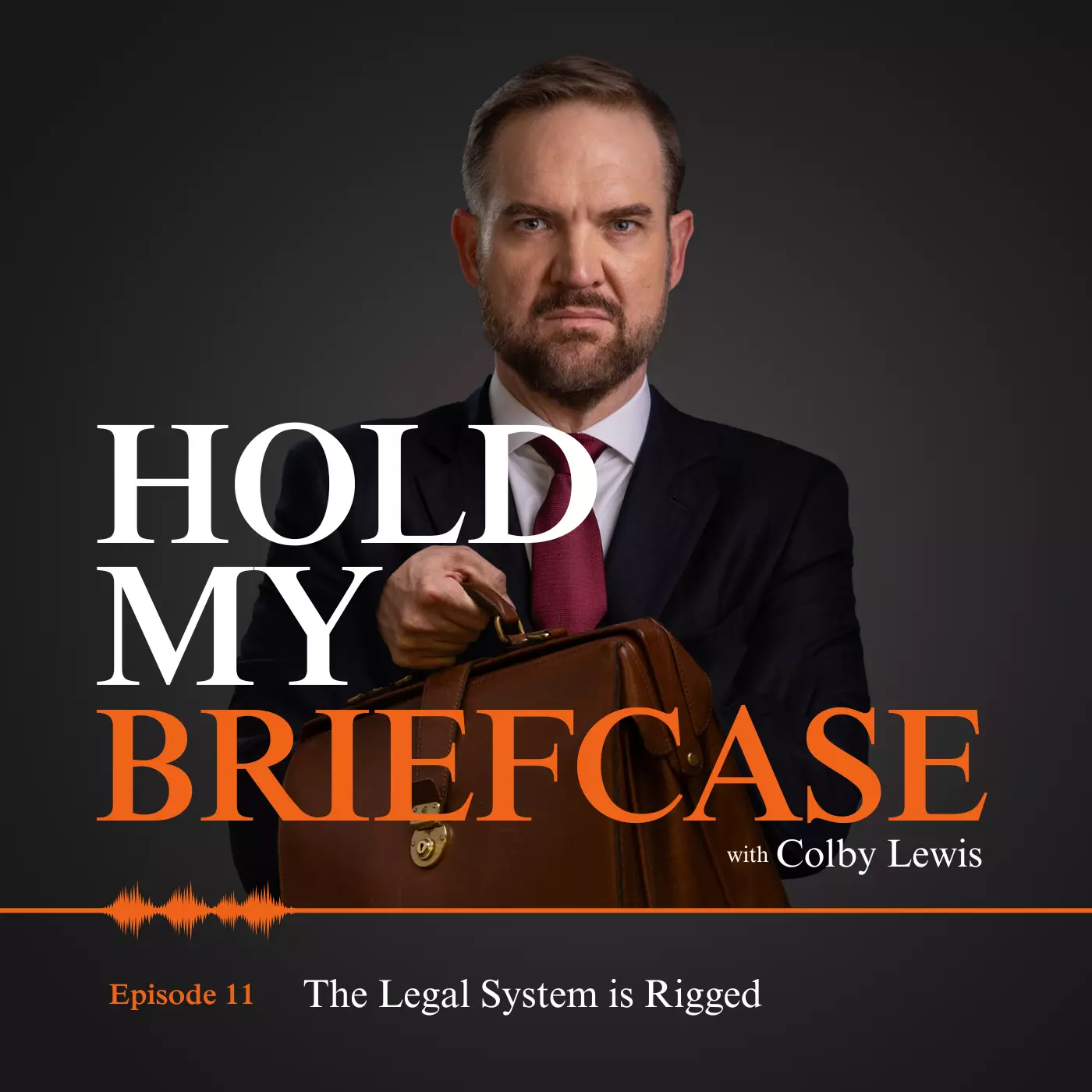
In Episode 11 of the Hold My Briefcase podcast, Houston personal injury attorney Colby Lewis delivers an unfiltered look at why the Texas civil justice system feels rigged against the average citizen. Attorney Lewis unpacks the structural hierarchy of Texas courts—from Justice of the Peace (JP) courts to fast-paced County Courts at Law—before diving into the psychological warfare waged by billion-dollar insurance companies. Listeners will learn how corporate adjusters utilize the infamous “delay, deny, and defend” playbook to run down the two-year statute of limitations and starve out injured families. Additionally, Colby exposes how insurance companies use mandatory confidentiality clauses to hide their incompetence and how corporate lobbyists pass Texas legislation that legally blocks juries from seeing a commercial trucking company’s history of safety violations.
Key Takeaways from Episode 011
- The Texas Court Hierarchy: Texas courts are divided by financial jurisdiction and procedure. Small Claims/JP courts allow citizens to argue without lawyers, while County Courts at Law handle higher-volume civil disputes like debt collections and evictions on aggressive timelines.
- The “Delay, Deny, Defend” Playbook: Insurance companies are incentivized to string victims along. They will delay responding to medical records for six months, deny the claim, and then pay defense lawyers thousands of dollars to defend that bad-faith denial in court.
- The Two-Year Trap: Carriers intentionally stall your claim hoping to run down the strict two-year Texas statute of limitations. Once that clock expires, you permanently lose your right to sue.
- Weaponized Distraction: If an 18-wheeler driver on PCP causes a fatal crash, defense lawyers will ignore the drug use and instead spend months blaming the victim’s high school sports injuries. If they cannot win on facts, they attack the procedure.
- Silenced by Confidentiality: When insurance companies finally lose and agree to pay a massive settlement, they force victims and attorneys to sign non-disclosure agreements (NDAs) to prevent the public from learning about the company’s gross negligence.
- Legislative Interference: Texas tort reform legislation actively limits what evidence a jury is allowed to see, effectively closing the courthouse doors to protect massive corporations from paying full compensation.
Episode Breakdown: How the Insurance Industry Games the System
[00:26] Navigating the Texas Court Systems
Understanding where your lawsuit will be filed dictates the rules of engagement. In Texas, the judicial system is tiered based on the amount of money in controversy.
| Texas Court Level | Procedural Rules & Best Case Use |
|---|---|
| Small Claims / Justice of the Peace (JP) | Features relaxed evidentiary rules designed for unrepresented citizens. Acts like “The People’s Court,” but any final judgment can be immediately appealed up to the next tier. |
| County Courts at Law | Pushes cases through rapidly on fast-tracked, high-volume dockets. Ideal for rapid actions like evictions and debt collections, but ill-suited for heavy discovery claims. |
- Small Claims Court (Justice of the Peace): Operating like “The People’s Court,” these venues feature relaxed evidentiary rules designed for unrepresented citizens. The judge acts as a facilitator, but any judgment can be immediately appealed to the next level.
- County Courts at Law: These mid-tier civil courts handle high-volume dockets like evictions, HOA disputes, and debt collection. Because they push cases through rapidly, they are often inappropriate venues for complex, high-dollar personal injury or construction defect claims that require extensive evidentiary discovery.
[03:05] The Discovery Battle: Pulling Teeth for Evidence
When you file a serious lawsuit against a corporation, they do not hand over their evidence willingly. In the discovery phase, your attorney demands documents. The defense has 30 days to respond, but they frequently refuse. This forces your lawyer to draft a Motion to Compel, wait weeks for a hearing, and fight a judge just to get basic pieces of paper. This friction is entirely by design; corporate defendants are literally paid to say “no” and string the process out for six to eight months.
[06:43] Why Lawsuit Settlements are Kept Secret
You rarely read the details of massive personal injury settlements in the newspaper, and that is not an accident. When a relentless attorney finally breaks an insurance company’s defense and forces them to settle a catastrophic claim, the carrier requires strict confidentiality clauses.
“The insurance company pays extra to make sure I can’t tell you specifics. All confidentiality clauses. And they hope that if I’m not allowed to tell people specifics, then that way you won’t find out about me… It’s just them trying to hide the ball.” — Colby Lewis
[08:49] The “Delay, Deny, and Defend” Business Model
No insurance company is going to give you money willingly. You are forced to navigate an automated maze of answering machines, claim numbers, and unreturned calls. The carrier’s goal is to delay your case for a year, deny your basic medical reimbursements, and then pay an expensive defense firm to defend that arbitrary denial. They use this delay tactic to push you closer to the two-year statute of limitations, hoping you simply give up or sign away your rights.
[10:33] Diverting the Jury’s Attention from the Truth
When defense attorneys know their client is undeniably guilty, they are trained to ignore the facts and argue procedure. Colby uses a striking hypothetical: if a commercial semi-truck driver under the influence of PCP kills a motorist at 60 mph, the defense team won’t talk about the drugs. Instead, they will dig into the victim’s medical history, attempting to blame the victim’s pain on a pre-existing knee injury from high school. They manufacture distractions to keep the jury’s eyes off the corporation’s negligence.
[11:39] How the Texas Legislature Protects Negligent Corporations
The legal system is structurally tilting toward corporate defense. Through heavy lobbying, the Texas legislature routinely passes laws that exclude critical evidence from the courtroom.
“Every year through legislative changes… less and less of the surrounding negligence gets shown. You don’t get to see all the other violations that the trucking company had… because the legislature decided they don’t want the juries to see it. The legislature wants to limit the jury’s ability to award compensation.” — Colby Lewis
[14:10] The Myth of the “Frivolous Lawsuit”
Public perception of lawsuits—like the infamous McDonald’s hot coffee case—is heavily skewed by decades of corporate propaganda. Insurance companies spend millions of dollars to convince potential jurors that injury victims are just looking for a “lottery payout.” The reality is that no amount of money is worth the physical misery, litigation stress, and years of corporate pushback that victims endure. Plaintiffs fight these cases on principle to ensure massive corporations do not get away with destroying lives.
Frequently Asked Questions (Answered in this Episode)
What is the ‘delay, deny, defend’ strategy used by insurance companies? The ‘delay, deny, defend’ strategy is a calculated corporate tactic where insurance adjusters stall basic communications, formally deny legitimate medical claims, and then hire defense lawyers to aggressively fight the victim in court. The goal is to financially starve the victim into accepting a lowball settlement.
Why are personal injury settlements always confidential? Insurance companies force plaintiffs to sign strict non-disclosure agreements (NDAs) and confidentiality clauses as a mandatory condition of receiving their settlement check. This prevents the victim and their lawyer from exposing the corporation’s bad acts, incompetence, or safety failures to the general public.
How does the Texas legislature limit evidence in personal injury trials? Through aggressive corporate lobbying, the Texas legislature passes tort reform laws that prevent juries from seeing a company’s complete history. In commercial trucking cases, for example, new laws can block a jury from seeing a trucking company’s past safety violations, protecting the corporation from paying full punitive damages.
What is the difference between a Texas County Court and a District Court? Texas County Courts at Law generally handle high-volume, lower-dollar disputes like debt collections and evictions on a fast-tracked schedule. District Courts are the primary trial courts in Texas, handling complex, high-dollar civil litigation, catastrophic personal injury, and severe construction defect cases.
Why do defense lawyers focus on my pre-existing conditions? If a defense lawyer knows their client (like an 18-wheeler driver) is clearly at fault for a crash, they will use distraction tactics. By digging up a victim’s old high school sports injuries or minor pre-existing conditions, they attempt to confuse the jury and argue that the car crash didn’t actually cause the victim’s current pain.
Are lawsuit abuse and ‘frivolous lawsuits’ a real problem? Claims of widespread “lawsuit abuse” are largely propaganda manufactured by the insurance industry. Corporations push narratives about “frivolous lawsuits” to create bias in the jury pool, making everyday citizens skeptical of legitimate injury victims before a trial even begins.
About Colby Lewis
Mikel Colby Lewis is the managing attorney and lead trial lawyer at The Law Offices of Colby Lewis. From his downtown Houston headquarters, Colby fights back against billion-dollar insurance companies, representing Texans in catastrophic personal injury claims, commercial litigation, and construction defect lawsuits (acting exclusively on behalf of building owners). A top-15% graduate of the University of Houston Law Center and a 14-year consecutive member of the Texas Bar College, Colby has spent two decades mastering the aggressive legal tactics required to break corporate stonewalling. He believes in clear, direct communication and relentless litigation to ensure his clients receive the justice the system attempts to deny them.
Stop Letting the Insurance Company Game the System
If you are trapped in a cycle of answering machines, denied claims, and corporate runarounds, you are playing exactly into the insurance company’s hands. Stop fighting a rigged system alone.
Call The Law Offices of Colby Lewis today to put a relentless trial lawyer in your corner.