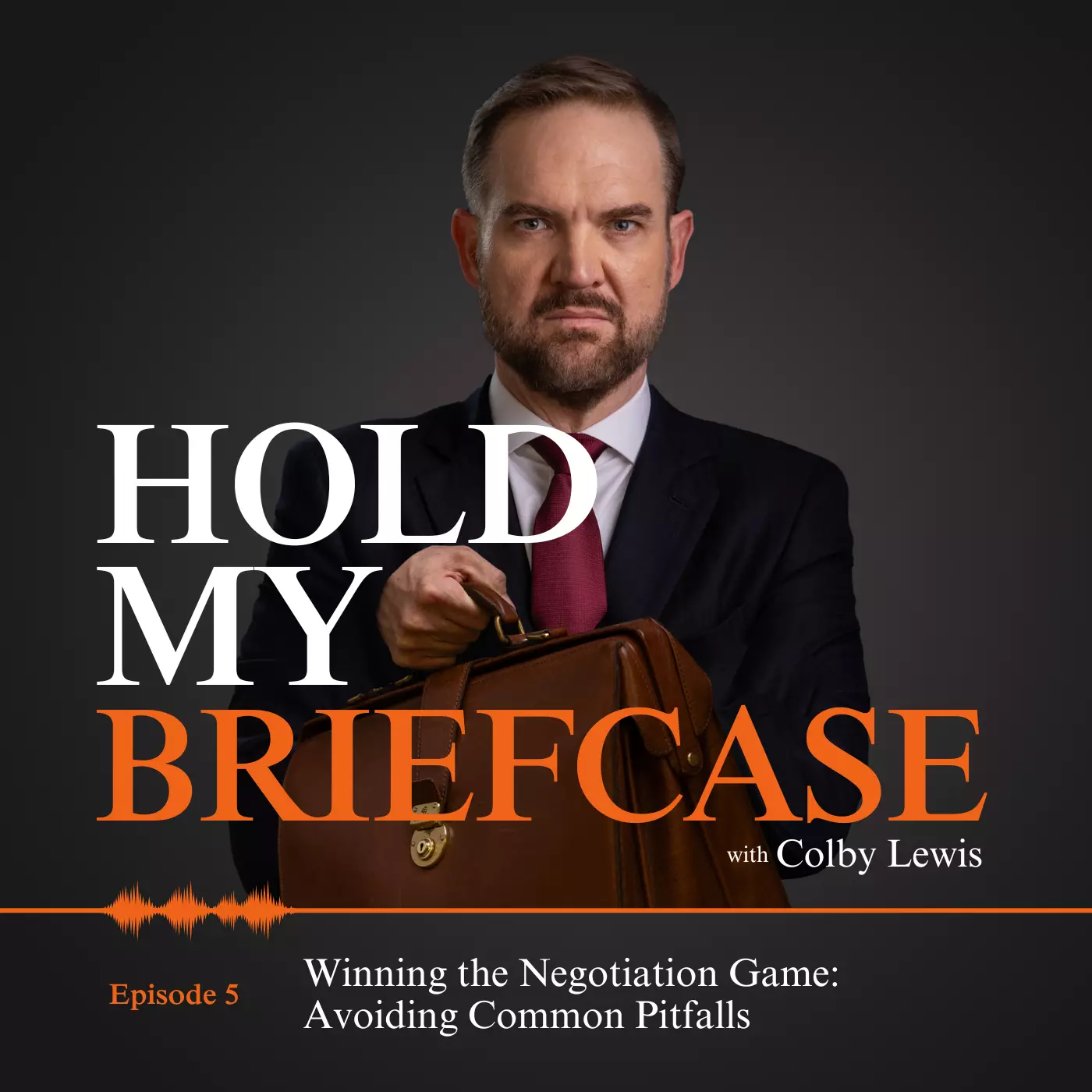
Episode Summary
In Episode 5 of the Hold My Briefcase podcast, Houston trial lawyer Colby Lewis breaks down elite legal negotiation tactics to help young attorneys and everyday citizens avoid psychological manipulation. Whether negotiating a complex legal settlement or buying a vehicle from a car salesman, understanding the leverage points of dialogue is vital. This episode focuses on the distinct danger of “bidding against yourself”—a common trap where an individual lowers their price before the other side even makes a counteroffer. Attorney Lewis utilizes a practical, real-world roleplay example to expose how experienced negotiators use emotional pushback and silence to force you to compromise your own position. The core takeaway is clear: state your position, hold the scope, establish a proper baseline, and never offer a secondary concession until the opposition puts a hard number on the table.
Key Takeaways from Episode 005
- The Danger of Bidding Against Yourself: The most common negotiation mistake is dropping your price or changing your terms before the other side makes a formal counteroffer.
- Understanding Anchoring: The first number thrown out in a room establishes a subconscious “anchor.” If you set that anchor poorly or mention an inflated value defensively, you accidentally raise the perceived value of their asset.
- The Power of Getting Their Number First: Forcing the opposing party to state their price or valuation first gives you immediate control over the scope of the deal.
- Recognize the “Song and Dance”: Experienced negotiators, like car salespeople who negotiate 10 to 15 times a day, use sentimental stories or feigned offense to make you feel your offer is unreasonable.
- Embrace the Pause: When you state a price or demand, stop talking. Forcing silence compels the other side to respond with a figure, protecting you from negotiating against your own interest.
Episode Breakdown: Psychological Traps in Modern Negotiation
[00:27] The Scope of Legal and Everyday Negotiation Tactics
Negotiation is not a single transaction; it is an ongoing tactical process. While most everyday individuals experience negotiation at a car dealership or during a home purchase, professionals encounter these maneuvers daily. A veteran car salesman handles 5, 10, or 15 negotiations a day for years, mastering every structural angle. To protect your positions, you must actively define and encapsulate the “scope” of the conversation before numbers are officially traded.
[01:31] Establishing Your Anchor Point Safely
Anchoring dictates that the first figure introduced becomes the baseline for the entire transaction. You can start high so that your initial position dominates the narrative, forcing the ultimate midpoint to settle in your favor. However, an incorrect anchor can destroy your leverage. Subconsciously referencing high dollar figures—even if meant as an exaggeration—raises the baseline value of the object or claim in the mind of the opposition.
“You want to cover the scope… encapsulate the scope. You can start real high so that way your point is bigger than their point, and then the midpoint is in the middle. The other thing to do is to get them to give you their number first.” — Colby Lewis
[02:38] The Core Trap: Explaining the “Can of Spam” Roleplay
Using a practical, everyday example involving a transaction for a standard item, Colby demonstrates how easily people fall victim to emotional deflection. When a buyer offers $2 for an item, a seasoned seller avoids offering a counter-price. Instead, they tell a “song and dance” about the sentimental value of the object, complaining that the offer is insulting or rude.
[04:11] Why You Must Never Bid Against Yourself
Bidding against yourself occurs the moment you lower your price or alter your terms because the other side remains silent or complains. In the roleplay, instead of demanding a counter-number from the seller, the buyer cracks under the emotional pressure and immediately asks, “How about $4?” By moving from $2 to $4 without receiving an alternative figure, the buyer successfully negotiated against their own wallet.
“Did you notice what he did? He didn’t give a number in response… That’s what’s called bidding against yourself. Because you’re on one side, you made a bid, nobody bids, and so you go lower. It’s bidding against yourself.” — Colby Lewis
Frequently Asked Questions (Answered in this Episode)
What does it mean to bid against yourself in a negotiation?
Bidding against yourself is a mistake where you modify your own position, offer, or settlement demand before the opposing party provides a formal counter-proposal. This structural error essentially forces you to negotiate against your own metrics, lowering your value without gaining any concessions.
How does psychological anchoring work when negotiating?
Anchoring is the process where the initial price or value stated in a negotiation establishes a subconscious mental baseline. Every subsequent proposal or counteroffer is measured against this original number, heavily influencing where the final agreement lands.
Should I let the other party give their number first?
Yes. Forcing the opposing party to state their position or offer first gives you crucial context regarding their boundaries. It allows you to adjust your baseline strategy without accidentally exposing your minimum or maximum limits prematurely.
What should I do if someone says my legal settlement offer is too low or too high?
When someone rejects your offer based on emotion or a general complaint, you must pause and wait for them to state an actual counter-figure. Do not alter your original number to satisfy their dissatisfaction; make them put a concrete number on the table before you adjust.
How do professional negotiators manipulate amateur buyers?
Professionals rely on repetition, high volume, and psychological deflection. They often avoid counter-offers, choosing instead to tell stories, evoke sentimental value, or claim an offer is insulting to pressure you into offering a better deal to yourself on their behalf.
About Colby Lewis
Mikel Colby Lewis is a premier personal injury attorney, trial advocate, and the founder of The Law Offices of Colby Lewis. From his central office in downtown Houston, Colby represents building owners in construction defect litigation, individuals in catastrophic personal injury suits, and businesses in complex commercial litigation across Texas. He holds a law degree from the University of Houston Law Center (ranking in the top 15% of his class) and an undergraduate certification from the University of Texas. Colby is a 14-year consecutive member of the Texas Bar College, dedicated to utilizing aggressive, battle-tested litigation and negotiation methodologies to protect client rights.
Protect Your Rights with Expert Legal Counsel
Whether you are dealing with a complex corporate commercial dispute or fighting an insurance company for fair compensation after an injury, do not negotiate blindly against seasoned corporate defense teams.
Call The Law Offices of Colby Lewis for a strategic, free consultation.