
Quién es el titular del reclamo, qué estatuto rige su edificio y qué está haciendo ya el reloj
RESPUESTA BREVE
Los defectos dentro de los límites de su unidad son generalmente su reclamo. Los defectos en los elementos comunes son reclamo de la asociación. Eso incluye la fundación, la estructura, el techo, la envolvente del edificio, la estructura de estacionamiento, los sistemas compartidos y, para sorpresa de la mayoría de los propietarios, los balcones. La Sección 82.052(4) del Código de Propiedad de Texas establece que los balcones, patios, porches, y las puertas y ventanas exteriores diseñadas para servir a una sola unidad son elementos comunes limitados, y los elementos comunes limitados siguen siendo elementos comunes.
Tres cosas deciden el resto. Su declaración, que manda y se lee primero. La fecha de registro de dicha declaración, porque el capítulo 82 se aplica únicamente a los condominios registrados a partir del 1 de enero de 1994. Y el calendario, porque el plazo de prescripción extintiva corre a partir de la conclusión sustancial y no le importa cuándo descubrió el problema.
Si un condominio o edificio de una asociación de propietarios (HOA) en Houston tiene goteras, grietas o se le desprenden los balcones, la primera pregunta no es a quién demandar. Es a quién le pertenece el reclamo. En la mayoría de los edificios, los daños que aparecen dentro de una unidad comienzan en un lugar que el propietario no controla: el techo, los cimientos, la envolvente exterior, la impermeabilización de los balcones, la estructura de estacionamiento o los sistemas mecánicos compartidos. Esos son elementos comunes, y los reclamos sobre ellos generalmente le pertenecen a la asociación, no al propietario que mira el techo manchado. Equivocarse en esa respuesta al principio le cuesta a las asociaciones más que cualquier otro error que veo.
Esta página abarca cómo son realmente las reclamaciones por defectos en condominios y asociaciones de propietarios (HOA) en Texas, en qué se diferencian de la reclamación de un propietario común, qué plazos están corriendo ahora mismo y qué debe hacer una junta directiva en primer lugar.
Puntos clave
- La declaración manda y el Código de Propiedad llena los vacíos. La sección 82.052 proporciona una regla predeterminada de límites para cualquier cosa que la declaración deje abierta.
- Los balcones son territorio de la asociación. La Sección 82.052(4) los asigna exclusivamente a la unidad a la que sirven, pero siguen siendo elementos comunes limitados, que son una categoría de elemento común.
- Verifique la fecha de grabación antes que cualquier otra cosa. El Capítulo 82 se aplica a los condominios cuya declaración se registró a partir del 1 de enero de 1994. Los edificios más antiguos de Houston se rigen por el Capítulo 81 más una breve lista de secciones tomadas prestadas.
- Su declaración puede enviar la demanda a arbitraje, y no puede enmendar su salida. La sección 82.120 permite el requisito y prohíbe las enmiendas retroactivas que lo eliminen.
- El proceso previo a la demanda es un proyecto, no un formulario. El informe de un ingeniero independiente, un aviso de inspección de diez días, un plazo de subsanación de noventa días, un aviso de reunión de treinta días y el voto de los propietarios que posean más de la mitad de todos los votos asignados.
- El plazo de prescripción extintiva es el límite temporal que pone fin a los casos. Corre a partir de la conclusión sustancial, independientemente de cuándo se haya descubierto el defecto, y la Sección 82.119(h) no lo suspende.
- Los honorarios se trasladan a la parte prevaleciente en ambas direcciones. La Sección 82.161(b) es obligatoria y la Corte Suprema de Texas ha confirmado que un demandante/demandado [asume contexto: defendant = demandado] cobra bajo esta al obtener un fallo de nada toma.
- La Ley de Responsabilidad en la Construcción Residencial limita lo que usted puede recuperar, y una oferta de acuerdo que ignore durante veinticinco días se considera rechazada.
Los estatutos que rigen un caso de vicios ocultos en un condominio en Texas
Seis disposiciones hacen la mayor parte del trabajo. Una junta que comprende estas seis comprende su propio caso.
| Autoridad | Lo que hace | Por qué a una junta directiva le importa |
|---|---|---|
| Cód. Prop. de Tex. § 82.002 | Establece qué condominios rige el Capítulo 82 y enumera las secciones que se aplican retroactivamente a los edificios anteriores a 1994. | Decide si el resto de esta página te aplica en algo |
| Código de Propiedad de Texas, Sección 82.052 | Proporciona los límites predeterminados de las unidades y define los elementos comunes limitados | Decide si el defecto es tuyo o de la asociación |
| Código de Propiedad de Texas § 82.102(a)(4) | Permitir que la asociación demande en su propio nombre en asuntos que afecten al condominio | La legitimación activa de la asociación para presentar el caso |
| Código de Propiedad de Texas, Sección 82.119 | Impone el informe de ingeniería previo a la demanda, la notificación, el período de subsanación y la votación de los propietarios | De seis a nueve meses de trabajo antes de que alguien presente una solicitud |
| Código de Propiedad de Texas, Sección 82.161(b) | Transfiere el pago de los honorarios de los abogados a la parte ganadora | Va en contra de la asociación si pierde |
| Cap. 27 del Código de Propiedad de Texas (RCLA) | Regula las reclamaciones por defectos en la construcción residencial y limita los daños indemnizables | Establece el límite máximo de la recuperación |
| Código de Práctica y Remedios Civiles de Texas § 16.009 | plazo de prescripción extintiva a partir de la terminación sustancial | La fecha límite externa e inalterable |
¿Por qué un reclamo por defectos en un condominio o asociación de propietarios (HOA) es diferente al reclamo de un propietario individual?
Un propietario individual con una losa agrietada tiene una propiedad, un constructor y un tomador de decisiones. Una asociación no tiene nada de eso. Tiene componentes de construcción compartidos, decenas o cientos de propietarios con diferentes apetitos por el costo y el riesgo, una junta directiva con deberes fiduciarios, una declaración de régimen que puede o no permitir la demanda, un fondo de reserva que debe pagar la investigación antes de que alguien recupere un dólar, y un mercado hipotecario que reacciona mal ante la frase “litigio pendiente por vicios ocultos de construcción”.”
Ese último punto merece la atención de la junta directiva desde el principio, y la Legislatura estuvo de acuerdo. Antes de que los propietarios voten sobre si demandar, Texas exige que la notificación de la asociación indique que iniciar una demanda o arbitraje puede afectar el valor de mercado, la comerciabilidad o la refinanciación de una unidad mientras se procesa el reclamo. Código de Propiedad de Texas § 82.119(f)(6). Una junta que presenta una demanda sin haber tenido esa conversación se arriesga a un segundo enfrentamiento, esta vez con sus propios miembros.
COLBY, EN ESPAÑOL SENCILLO
La persona que sufre el daño y la persona que presenta el reclamo suelen ser dos personas diferentes
Esta es la llamada que recibo con más frecuencia. Un tipo está furioso, y tiene todo el derecho de estarlo. Su techo está manchado, sus pisos están arruinados, lleva catorce meses peleando con el administrador de la propiedad y quiere saber a quién demanda. Y tengo que decirle algo que no quiere oír: el agua no viene de su propiedad. Viene de la propiedad de todos.
Usted es dueño de la pintura. No es dueño de lo que está detrás de la pintura. No estoy siendo ingenioso, eso es la Sección 82.052. Así que la persona con el daño y la persona que es dueña del reclamo son dos personas diferentes paradas en el mismo edificio, y hasta que alguien resuelva eso, no pasa nada. Nadie contrata a un ingeniero, nadie envía una notificación y el reloj sigue corriendo.
Averigua cuál eres antes de gastar un dólar en cualquier otra cosa.
¿Dónde termina una unidad y dónde empiezan los elementos comunes?
La declaración traza el límite y los propietarios están obligados por él
Este es el primer documento que leo y responde a la primera pregunta. Los propietarios de unidades de condominios aceptan los términos, condiciones y restricciones de la declaración del condominio al aceptar las escrituras de sus unidades individuales. Daly v. River Oaks Place Council of Co-owners, 59 S.W.3d 416, 418 (Tex. App.—Houston [1st Dist.] 2001, no pet.).
Donde la declaración guarda silencio, la Sección 82.052 llena el vacío
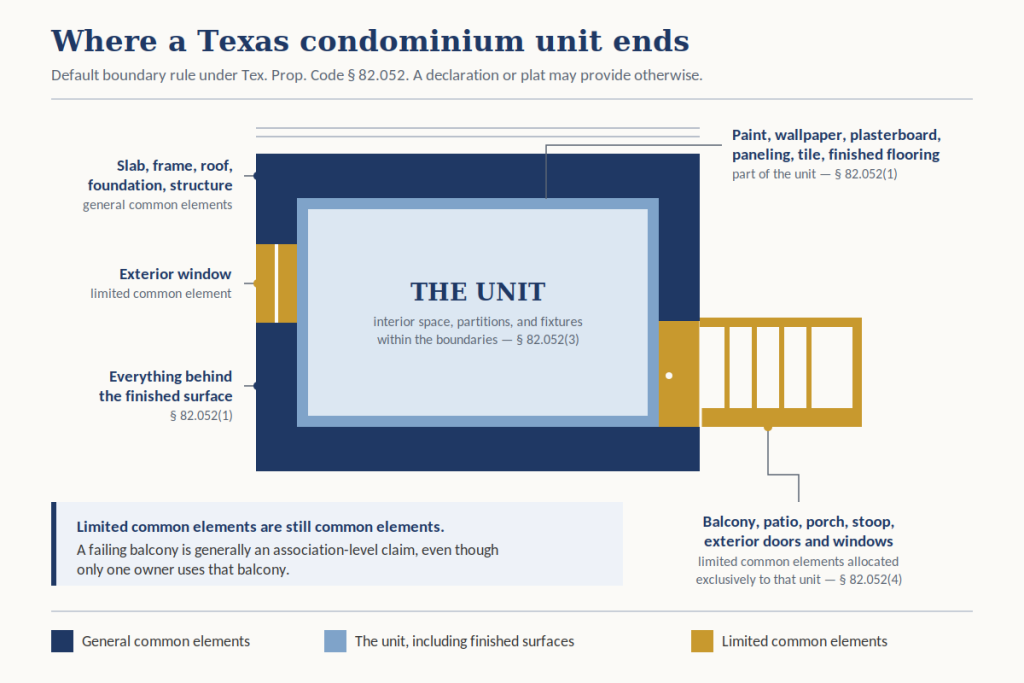
Regla predeterminada de linderos conforme al art. 82.052 del Código de la Propiedad de Texas. Una declaración o plano puede disponer lo contrario.
Está diseñado en el azul marino de su marca con un acento dorado, cita el estatuto subsección por subsección, y cada etiqueta es texto vectorial real en lugar de píxeles generados, por lo que se mantiene nítido en cualquier tamaño y es seleccionable e indexable.
Salvo que la declaración o el plano dispongan lo contrario, si las paredes, los pisos o los techos se designan como límites de la unidad, entonces las tablillas, los listones, los paneles de yeso, el cartón yeso, el yeso, los paneles, los azulejos, el papel tapiz, la pintura, los pisos acabados y cualquier otro material que componga las superficies acabadas pertenecen a la unidad. Todo lo que está detrás de ellos pertenece a los elementos comunes. Cód. de Prop. de Tex. § 82.052(1). Es por eso que una fuga que arruina el piso de un propietario generalmente se origina en la propiedad de otra persona.
Las tuberías, los vertederos y los conductos se dividen de la misma manera. La porción que sirve a una sola unidad es un elemento común limitado asignado a dicha unidad. La porción que sirve a más de una unidad es un elemento común general. Código de Propiedad de Texas, sección 82.052(2).
Los balcones y patios son elementos comunes limitados, los cuales siguen siendo elementos comunes
La Sección 82.052(4) sorprende a más propietarios que cualquier otra disposición del Capítulo 82. Las persianas, los toldos, las jardineras de ventana, los escalones de las puertas, los descansillos, los porches, los balcones, los patios y las puertas y ventanas exteriores u otros accesorios diseñados para servir a una sola unidad, pero ubicados fuera de los límites de la unidad, son elementos comunes limitados asignados exclusivamente a dicha unidad.
Vuelve a leer la última frase. Los elementos comunes limitados se asignan de forma exclusiva, no se poseen de forma exclusiva. Siguen siendo elementos comunes. Ese es todo el sentido, y es la razón por la cual un balcón en mal estado es un problema a nivel de la asociación, aun cuando un solo propietario camine sobre él. Nota también la cláusula comodín: la lista termina con “u otros accesorios diseñados para servir a una sola unidad”, lo cual abarca componentes que los redactores nunca mencionaron.
COLBY, EN ESPAÑOL SENCILLO
Piensa en tu balcón como el espacio de estacionamiento de enfrente
El nombre “elemento común limitado” no les está haciendo ningún favor, así que permítanme darles la versión que les doy a los clientes.
Piense en el espacio de estacionamiento frente a su unidad. Nadie más se estaciona ahí. Sus invitados saben que es suyo. Juraría sobre una pila de biblias que es dueño de él. Pero no es así. La asociación es dueña de él y usted obtiene el uso exclusivo de este. Esa es toda la idea.
Su balcón funciona exactamente de la misma manera. Usted es el único que está parado en él. Usted pone la parrilla en él, pone las plantas en él, y aun así no es suyo. Entonces, cuando la impermeabilización debajo de ese balcón falla y el agua entra en la plataforma estructural y el acero de refuerzo comienza a corroerse, esa reparación no es su reparación. Es la reparación de la asociación, y el reclamo al respecto es el reclamo de la asociación.
Un solo propietario no puede reparar un balcón por sí mismo. Un solo propietario tampoco puede demandar al respecto por su cuenta. Lleve esto a su junta directiva antes de que alguien gaste su propio dinero en una reparación que no tenía autorización para hacer.
Quien paga el mantenimiento sigue el mismo mapa
La Sección 82.107(a) hace que la asociación sea responsable del mantenimiento, la reparación y el reemplazo de los elementos comunes y que cada propietario sea responsable de su propia unidad, a menos que la declaración disponga lo contrario. Dos excepciones son importantes. Según la Sección 82.107(b), un propietario asume el costo de cualquier instalación o equipo de servicios públicos que sirva únicamente a la unidad de dicho propietario, ya sea que se encuentre o no fuera de los límites de la unidad. Según la Sección 82.107(c), un propietario asume el costo de las ventanas y puertas que sirven únicamente a la unidad de dicho propietario. Las declaraciones frecuentemente reasignan todo esto, razón por la cual la respuesta nunca es genérica.
Las comunidades de casas adosadas (townhomes) y las asociaciones de propietarios (HOA) de casas unifamiliares trazan la línea divisoria de manera diferente
Ahí, por lo general los propietarios son dueños de la estructura y el terreno, y el reclamo de la asociación se reduce a la propiedad verdaderamente compartida: calles privadas, drenaje y retención, edificios de amenidades, muros perimetrales e infraestructura de servicios públicos compartida. Dos asociaciones en el mismo código postal pueden tener respuestas completamente diferentes.
¿De quién es la reclamación: del propietario, de la asociación o de ambos?
Texas otorga a la asociación legitimación procesal para demandar en su propio nombre. A menos que la declaración disponga lo contrario, la asociación, actuando a través de su junta directiva, puede iniciar, defender, intervenir en, resolver o llegar a acuerdos en litigios o procedimientos administrativos en su propio nombre en representación propia o de dos o más propietarios de unidades en asuntos que afecten al condominio. Cód. de Prop. de Tex. § 82.102(a)(4). Nótese cómo comienza la sección. Toda la lista de facultades de la asociación está precedida por “a menos que la declaración disponga lo contrario”, lo cual es la razón legal por la cual la declaración se lee primero.
Tener legitimación no es lo mismo que tener autoridad ilimitada. La Primera Corte de Apelaciones de Houston ha explicado que una asociación que demanda en nombre de los propietarios asume los derechos de estos tal como los encuentra, incluidos sus acuerdos de arbitraje, porque una parte no puede beneficiarse de su contrato y al mismo tiempo anularlo. Stanford Development Corp. v. Stanford Condominium Owners Association, 285 S.W.3d 45 (Tex. App.—Houston [1st Dist.] 2009, no pet.). Lo inverso también es aplicable. Cuando una asociación llegó a un acuerdo y liberó reclamaciones expresamente en nombre de todos los propietarios de unidades, los propietarios individuales quedaron vinculados por dicha liberación. Phan v. Addison Spectrum, L.P., 244 S.W.3d 892 (Tex. App.—Dallas 2008, no pet.).
Por lo tanto, hay tres respuestas, y con frecuencia las tres son verdad en el mismo edificio al mismo tiempo.
- La asociación, por los defectos en los elementos comunes, incluidos los elementos comunes limitados, y por los asuntos que afectan al condominio en general.
- El propietario individual, por los defectos dentro de los límites de la unidad y por las propias pérdidas consecuentes de dicho propietario: acabados arruinados, costos de desplazamiento, pérdida de alquiler, valor disminuido.
- Ambos, en paralelo, lo cual es común y requiere coordinación. Las reclamaciones no coordinadas permiten que un constructor ponga a los propietarios en contra de la asociación, o argumente que un descargo firmado por uno eliminó los derechos del otro.
COLBY, EN ESPAÑOL SENCILLO
La asociación que demanda no borra su reclamo, pero un finiquito mal redactado puede hacerlo
Los propietarios me preguntan todo el tiempo si la reclamación de la asociación significa que ellos no pueden. No. Ustedes tienen dos montones de daños diferentes.
La asociación tiene el edificio. El techo, la fachada, el garaje, los balcones, las tuberías dentro de las paredes. Usted tiene lo que pasó dentro de sus cuatro paredes: los pisos que alguien tiene que arrancar, la cuenta del hotel mientras lo hacen, el inquilino que dejó de pagar el alquiler, el hecho de que su unidad se valore por debajo de una idéntica dos pisos más arriba. Esos son sus daños, y nadie tiene derecho a regalarlos por usted.
Pero aquí es donde todo se tuerce. La asociación llega a un acuerdo, alguien firma un finiquito, y el documento dice que es en nombre de todos los propietarios. Un tribunal de Dallas aplicó exactamente eso. Si nadie prestaba atención a lo que significaba “todas las reclamaciones” en ese documento, su reclamación se fue por la puerta dentro del papeleo de otra persona.
Lea el comunicado. Léalo antes de que su junta directiva lo firme, no después. Y si su junta directiva no se lo muestra, esa es su propia respuesta.
¿El capítulo 82 rige su edificio? Revise primero la fecha de grabación.
En Texas operan dos estatutos de condominios, y cuál de ellos rige depende de una fecha. El Capítulo 82, la Ley Uniforme de Condominios, se aplica a todos los condominios comerciales, industriales, residenciales y de otro tipo en Texas cuya declaración se registre a partir del 1 de enero de 1994. Código de Propiedad de Texas § 82.002(a). Los edificios registrados antes de esa fecha se rigen por el Capítulo 81, al cual la Legislatura tituló, con bastante claridad, Condominios creados antes de la adopción de la Ley Uniforme de Condominios.
El capítulo 82 no simplemente reemplaza al estatuto anterior. La sección 82.002(c) enumera las secciones específicas del capítulo 82 que se aplican retroactivamente a los condominios anteriores a 1994, y esa lista es más corta de lo que la mayoría supone. Incluye las secciones 82.102(a)(1) a la (7), por lo que una asociación más antigua aún conserva la facultad de iniciar litigios sobre asuntos que afectan al condominio. Conserva esa facultad también en virtud del estatuto anterior: un consejo de propietarios puede iniciar litigios en nombre de dos o más propietarios de apartamentos en relación con un asunto relacionado con los elementos comunes. Cód. de Prop. de Tex. § 81.201(b).
También existe una opción de participación voluntaria. Los propietarios de un condominio anterior a 1994 pueden votar para enmendar la declaración, mediante el proceso de enmienda que la declaración autoriza, para que se aplique el Capítulo 82. Código de Propiedad de Texas § 82.002(a)(1). Dicha enmienda no puede ampliar los deberes del declarante más allá de lo que eran inmediatamente antes de la votación. Código de Propiedad de Texas § 82.002(b). Algunos edificios en Houston hicieron esto hace décadas y ningún miembro actual de la junta directiva lo recuerda.
¿Se aplica el proceso previo a la demanda de la Sección 82.119 a un condominio construido antes de 1994?
Probablemente no, pero nadie debería confiar en eso sin asesoría legal. Aquí está el razonamiento, y aquí está exactamente cuánto peso tiene.
La Sección 82.002(c) no enumera la Sección 82.119 ni la Sección 82.120. Ambas fueron agregadas por una sola sección de un proyecto de ley en 2015, y dicho proyecto de ley no enmendó la Sección 82.002. Ley del 27 de mayo de 2015, 84.º Leg., R.S., cap. 730 (H.B. 1455), § 1. La única disposición de aplicabilidad del proyecto de ley aborda el momento oportuno en lugar de la cobertura: la Sección 82.119 se aplica únicamente a una demanda presentada o un procedimiento de arbitraje iniciado a partir del 1 de septiembre de 2015. Posteriormente, la Legislatura enmendó la Sección 82.002 de nuevo en 2019, cuatro años después, y aún no agregó ninguna de las dos secciones a la lista. Ley del 17 de mayo de 2019, 86.º Leg., R.S., cap. 39 (H.B. 302), § 4. El Capítulo 81, por su parte, no contiene ningún requisito de informe de ingeniero, ningún requisito de votación de propietarios, ni ningún filtro previo a la demanda de ningún tipo.
Ese es un argumento textual, no un fallo. Aparentemente ningún tribunal de Texas ha decidido la cuestión. Cualquier asociación en esa postura debe confirmarlo con su asesor legal antes de omitir un paso, porque el costo de adivinar mal es que se desestime un caso por cuestiones de procedimiento en lugar de resolverse sobre el fondo. La propia declaración de la asociación puede imponer condiciones previas sin importar qué capítulo gobierne, y la Ley de Responsabilidad por Construcción Residencial se aplica en ambos casos.
COLBY, EN ESPAÑOL SENCILLO
Saque su declaración y mire la fecha
Esto es lo más barato que su junta directiva hará jamás, y casi nadie lo hace.
Vaya a los registros de bienes raíces del condado y obtenga su declaración. Revise la fecha de registro. Si se registró antes del 1 de enero de 1994, usted no opera bajo el mismo estatuto que el edificio de cruzar la calle, y mucho de lo que su compañía administradora le dijo no aplica para usted. Usted se rige por el Capítulo 81, más una breve lista de secciones del Capítulo 82 que la Legislatura retomó e incluyó. El proceso previo a la demanda que todo el mundo asume que es obligatorio no está en esa lista.
Ahora bien, ¿le estoy diciendo que lo omita? No. Ningún tribunal ha dictaminado al respecto, y preferiría mucho más ganar su caso en un balcón que se cae a pedazos que jugarme el dinero de su edificio en un argumento de procedimiento que nadie ha probado. Pero usted debe saber bajo qué cuerpo de ley está viviendo antes de extender un cheque de cuarenta mil dólares a un ingeniero.
Mientras esté en los registros, verifique si los propietarios alguna vez enmendaron la declaración para adoptar el Capítulo 82. La sección 82.002(a)(1) les permite hacerlo, y a veces lo hicieron. Es una búsqueda rápida. Hágalo esta semana.
¿Qué requiere realmente el proceso previo a la demanda de la Sección 82.119?
Si el capítulo 82 rige su edificio y la asociación tiene ocho o más unidades, la asociación debe superar un requisito legal previo antes de entablar una demanda o iniciar un arbitraje sobre un reclamo relacionado con la construcción o el diseño de una unidad o de los elementos comunes. El estatuto enmarca este umbral como una exclusión: no se aplica a una asociación con menos de ocho unidades. Tex. Prop. Code § 82.119(a). Todo lo que se indica a continuación se suma a cualquier condición previa que el reglamento ya imponga.
| Paso | Requisito | Sincronización |
|---|---|---|
| 1 | Notificar a todas las partes sujetas a un reclamo sobre la inspección del ingeniero, identificando al ingeniero, las unidades o elementos comunes que serán inspeccionados, y la fecha y la hora | Al menos 10 días antes de la inspección. § 82.119(c) |
| 2 | Cada parte sujeta a una reclamación podrá asistir a la inspección, personalmente o por medio de un representante | En la inspección. § 82.119(d) |
| 3 | Obtenga un informe escrito independiente de un tercero por parte de un ingeniero profesional con licencia que identifique las unidades o elementos comunes en cuestión, describa su condición física actual y describa cualquier modificación, mantenimiento o reparación que los propietarios o la asociación ya hayan realizado. | Antes de presentar. § 82.119(b)(1) |
| 4 | Entregue el informe a cada propietario de unidad y a cada parte sujeta a un reclamo, y dé a esas partes la oportunidad de inspeccionar y corregir las condiciones identificadas | Al menos 90 días después de que se complete el informe. § 82.119(e) |
| 5 | Envíe la convocatoria de la reunión que contenga las siete declaraciones obligatorias, incluida la advertencia sobre el valor de mercado, la comercialización y la refinanciación. La convocatoria debe ser preparada y firmada por alguien ajeno al abogado de reclamos de la asociación y al bufete de dicho abogado. | Al menos 30 días antes de la reunión. § 82.119(f), (g) |
| 6 | Obtener la aprobación de los propietarios que posean más del 50 por ciento del total de los votos asignados en virtud de la declaración, en persona o mediante poder, en una reunión debidamente convocada | En la reunión. § 82.119(b)(2) |
Lea el paso seis atentamente. El umbral es más de la mitad de todos los votos asignados, no la mitad de los propietarios que se presentan y no la mitad de un quórum. En un edificio con propietarios crónicamente ausentes, ese es el paso que falla.
COLBY, EN ESPAÑOL SENCILLO
El proceso anterior a la demanda es un proyecto, no un formulario
Las juntas directivas escuchan “requisito previo a la demanda” e imaginan un formulario que alguien firma. No es un formulario. Es un proyecto de construcción con abogados adjuntos.
Contratas a un ingeniero, y tiene que ser un tercero independiente, no la empresa que ha estado reparando tu techo durante nueve años. Le das al constructor diez días de aviso antes de la inspección, y este puede presentarse y ver trabajar a tu experto. El ingeniero redacta un informe que debe describir cada reparación que ya has hecho, y sí, la otra parte recibe una copia de ese informe. Luego tienen noventa días para venir a solucionar lo que está en él. Después convocas a una reunión con treinta días de anticipación. Luego necesitas que los propietarios que posean más de la mitad de todos los votos del edificio voten a favor. No la mitad de las personas en la sala. La mitad de todos.
¿Cuánto tiempo dura eso? De seis a nueve meses si nada sale mal, y siempre algo sale mal, por lo general la votación.
Así que no cuentes hacia adelante desde hoy. Cuenta hacia atrás desde tu fecha límite. Si los números no cuadran, necesitas saberlo ahora, no en el mes siete.
¿Cuáles son los plazos y qué es lo que realmente detiene el reloj?
Dos relojes corren en cada caso de vicios ocultos de construcción, y se comportan de manera diferente. Las juntas directivas suelen seguir el equivocado.
Limitaciones: el reloj sobre el cual se puede discutir
Una demanda por negligencia o daños a la propiedad conlleva un plazo de prescripción de dos años. Tex. Civ. Prac. & Rem. Code § 16.003(a). Las demandas por contrato y garantía generalmente conllevan cuatro años. Tex. Civ. Prac. & Rem. Code § 16.004, § 16.051. Ambos corren a partir del devengo, y el devengo es donde residen los argumentos de la regla de descubrimiento y ocultamiento fraudulento. Esos argumentos son reales, dependen en gran medida de los hechos y no son algo en torno a lo cual se pueda planificar.
Reposo: el reloj al que no le importa lo que sabías
Un estatuto de caducidad no es un plazo de prescripción. Es un límite temporal sustantivo que se calcula a partir de un evento, no a partir del descubrimiento. Para una persona que construye o repara una mejora a un bien inmueble, el plazo general es de diez años después de la conclusión sustancial. Tex. Civ. Prac. & Rem. Code § 16.009(a). Para arquitectos, ingenieros, diseñadores de interiores y arquitectos paisajistas registrados, el plazo general es asimismo de diez años. Tex. Civ. Prac. & Rem. Code § 16.008(a). Ambas secciones extienden el plazo por dos años cuando un reclamante presenta una reclamación por daños por escrito dentro del período de caducidad.
En 2023, la Legislatura añadió un plazo más corto de seis años para ciertas construcciones residenciales. H.B. 2024, 88.ª Leg., R.S. (2023), que añade los párrafos (a-2) al (a-4) de la Sección 16.009 del Código de Práctica y Remedios Civiles de Texas (Tex. Civ. Prac. & Rem. Code). Se aplica únicamente cuando se cumplen las tres condiciones siguientes: la demanda surge del diseño, la construcción o la reparación de una “residencia” tal como la define dicha subsección, el demandado es un contratista según la definición de la Sección 27.001 del Código de la Propiedad, y dicho contratista proporcionó una garantía por escrito que cumple con los mínimos estatutarios de un año en mano de obra y materiales, dos años en sistemas de distribución de fontanería, electricidad, calefacción y aire acondicionado, y seis años en componentes estructurales principales.
Aquí está el punto que importa para un condominio, y es uno que la mayoría de los resúmenes pasan por alto. La nueva subsección define “residencia” por sí misma, y la definición que redactó abarca una vivienda unifamiliar o bifamiliar independiente, una casa adosada (townhouse) de no más de tres plantas con un medio de salida separado, y una estructura accesoria de no más de tres plantas. Tex. Civ. Prac. & Rem. Code § 16.009(a-4)(2). No incluye el lenguaje de condominios que la Legislatura utilizó en la RCLA, el cual abarca expresamente “una unidad y los elementos comunes en una estructura residencial de múltiples unidades”. Tex. Prop. Code § 27.001(6). La Legislatura tomó prestada la definición de “contratista” de la RCLA y redactó una definición más restrictiva de “residencia” en el mismo acto.
Leído de esa manera, un condominio multifamiliar queda fuera del período de seis años y permanece en diez. Algunos comentaristas califican la cuestión como disputada. No he encontrado ningún tribunal de Texas que la haya decidido. La aplicabilidad también depende de la fecha del contrato en lugar de la acumulación o finalización: el período abreviado se aplica a los contratos celebrados a partir del 9 de junio de 2023.
| Proyecto | Periodo de reposo | Autoridad |
|---|---|---|
| Mejora de bienes inmuebles, regla general | 10 años desde la terminación sustancial | § 16.009(a) |
| Arquitectos, ingenieros, diseñadores de interiores, arquitectos paisajistas | 10 años desde la terminación sustancial | § 16.008(a) |
| Entidad gubernamental como demandante | 8 años, con excepciones que preservan 10 para ciertos trabajos en carreteras estatales y de transporte público | §§ 16.008(a-1), 16.009(a-1) |
| Casa independiente o casa adosada de tres pisos, el contratista otorgó una garantía escrita conforme, contrato a partir del 9 de junio de 2023 | 6 años desde la terminación sustancial | § 16.009(a-2) a (a-4) |
| Unidad o elemento común de un condominio multifamiliar | 10 años en la mejor lectura; la definición de seis años de “residencia” omite los condominios | § 16.009(a-4)(2), en comparación con el § 27.001(6) del Código de la Propiedad de Texas |
| Garantía escrita por un plazo más prolongado, el demandado en posesión real, o conducta dolosa u ocultamiento fraudulento | La prescripción extintiva no impide la acción | § 16.009(e) |
Lo que la Sección 82.119(h) suspende y lo que no suspende
El estatuto previo a la demanda contiene una disposición de suspensión, y es más restrictivo que su reputación. El plazo de prescripción se suspende hasta el primer aniversario de la fecha en que la asociación inicia los procedimientos de la Sección 82.119(b), pero solo si la asociación los inicia durante el último año del plazo de prescripción aplicable. Cód. de Prop. de Tex. § 82.119(h).
De esto se desprenden tres consecuencias. Una asociación que comienza el proceso con más de un año restante en el plazo de prescripción no recibe ninguna suspensión (*tolling*) en absoluto. La suspensión otorga un año, no más. Y la palabra “caducidad” (*repose*) no aparece en ninguna parte de la Sección 82.119, por lo que una asociación puede completar cada paso estatutario a tiempo y aun así verse impedida por la Sección 16.009. Nuevamente, esa interpretación se basa en el texto; ningún tribunal de Texas parece haber interpretado el subapartado (h).
COLBY, EN ESPAÑOL SENCILLO
Hay dos relojes y solo uno de ellos te escuchará
Esta es la parte que me quita el sueño en estos casos, así que quiero que la escuches con atención.
El primer reloj es el de la prescripción. Comienza cuando usted supo o debería haber sabido que tenía un problema, y los abogados pueden discutir sobre eso. La regla del descubrimiento, la ocultación fraudulenta, cuándo empezó realmente la filtración. Esa es una pelea que se puede tener.
El segundo reloj es el de reposo. Comienza el día en que el edificio estuvo sustancialmente terminado y no le importa lo que usted sabía, cuándo se enteró, quién le mintió o qué tan bien se ocultó el defecto. Diez años y luego se acaba. No se puede discutir con él, porque no es un plazo para demandar. Es una decisión de que la reclamación deja de existir.
Ahora todo el mundo se entera de que hay una disposición de suspensión y se relajan. Vayan a leerla. Solo les ayuda si inician el proceso previo a la demanda en el último año, solo les compra un año, y la palabra caducidad no aparece en ninguna parte. Mientras tanto, el proceso en sí consume de seis a nueve meses del calendario.
Así que si su edificio tiene más de siete años, esto no es un punto en la agenda para el próximo trimestre. Póngalo en la agenda de este mes.
¿Su declaración envía la demanda a arbitraje?
Texas lo permite expresamente. Una declaración puede estipular que una reclamación relativa a la construcción o el diseño de una unidad o de los elementos comunes debe resolverse mediante arbitraje vinculante, y puede prescribir el procedimiento. Código de Propiedad de Texas, sección 82.120(a). Los desarrolladores incluyen estas disposiciones y son exigibles a primera vista.
Una asociación no puede solucionar el problema mediante una enmienda posterior. Una enmienda que modifica o elimina el requisito de arbitraje no se aplica retroactivamente a una reclamación basada en un acto u omisión ocurrido antes de la enmienda. Código de Propiedad de Texas, sección 82.120(b). Si combinamos eso con el caso Stanford Development, donde una asociación que demanda en nombre de los propietarios heredó las obligaciones de arbitraje de estos, la cuestión del foro suele resolverse mucho antes de que nadie presente nada.
Los defectos que vemos en los edificios de condominios y asociaciones de propietarios en Houston
Houston falla en los edificios de manera predecible. Conocer el patrón local importa, porque lo primero que argumenta un perito de la defensa es mantenimiento postergado en lugar de construcción defectuosa, y responder a ese argumento requiere especificidad.
Movimiento de cimientos y suelos arcillosos expansivos
La arcilla de la Costa del Golfo se hincha y se contrae con la humedad. Una investigación geotécnica superficial, cimentaciones de tamaño insuficiente o mal diseñadas, y un drenaje del terreno que concentra el agua contra la estructura producen movimientos diferenciales. Esto se manifiesta en losas y muros de contención agrietados, marcos de puertas y ventanas descuadrados, revestimientos separados y pisos visiblemente desnivelados. En una comunidad de asociación de propietarios (HOA) con múltiples edificios, el mismo diseño y los mismos suelos tienden a producir la misma falla en toda la propiedad, lo cual es lo que convierte un reclamo de mantenimiento en un reclamo por defectos.
Impermeabilización de balcones y cubiertas de podio
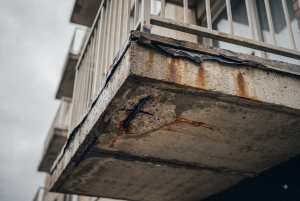 El fallo recurrente más costoso en los condominios de mediana y alta altura en Houston, y el que con más frecuencia obliga a una derrama especial. Los detalles de impermeabilización que se interrumpen en el umbral, los vierteaguas faltantes o invertidos, la pendiente insuficiente hacia el desagüe y las juntas de sellado defectuosas permiten que el agua penetre en la losa estructural, donde se queda. Para cuando alguien ve manchas de óxido o desmoronamiento en la parte inferior, el refuerzo ya se está corroyendo y el alcance de la reparación se ha multiplicado. Recuerde la etiqueta legal: los balcones son elementos comunes limitados según la Sección 82.052(4), por lo que esto es territorio de la asociación a pesar de que un solo propietario use el balcón.
Fallas en la envolvente del edificio, estuco y muro cortina
La lluvia impulsada por el viento durante las tormentas del Golfo encuentra cada resquicio en el molduraje, las juntas de sellado y la interfaz entre la ventana y el muro. Los ensamblajes de estuco y EIFS instalados sin un plano de drenaje funcional atrapan agua en la cavidad del muro y pudren el panel revestidor y la estructura silenciosamente durante años. Los sistemas de muros cortina y muros ventana fallan en el sello perimetral y en las transmisiones, que es exactamente donde los gremios se transfieren el trabajo unos a otros. Un detalle complicado para las juntas directivas: el ensamblaje del muro es un elemento común, pero la Sección 82.107(c) pone el costo de mantener las ventanas y puertas que dan servicio a una sola unidad en cabeza de dicho propietario a menos que la declaración establezca lo contrario, por lo que las reclamaciones sobre la envolvente frecuentemente cruzan esa línea.
Estacionamientos estructurales y concreto estructural
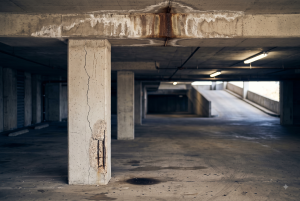 La intrusión de cloruros, el desprendimiento de concreto, los tendones de postensado corroídos, las juntas de dilatación inadecuadas u omitidas, y el drenaje que se acumula en lugar de drenar. Estos problemas se agravan más rápido de lo que los propietarios esperan y conllevan riesgos reales para la seguridad. Un estacionamiento en estas condiciones no es un elemento de reparación postergada.
Si la condición es peligrosa, la ley avanza más rápido. Un contratista que recibe un aviso por escrito de un defecto de construcción derivado de su propio trabajo, y que crea una amenaza inminente para la salud o la seguridad de los habitantes, debe tomar medidas razonables para solucionar el defecto tan pronto como sea practicable. Si el contratista no lo soluciona en un plazo razonable, el propietario puede hacerlo solucionar y recuperar el costo razonable de las reparaciones más los honorarios de abogados y las costas, además de otros daños recuperables conforme a la ley que no sean incompatibles con el capítulo. Tex. Prop. Code § 27.004(m). Dicha subsección opera sin perjuicio del cronograma ordinario de aviso y oferta en las subsecciones (a), (b) y (c). Las conexiones de balcones defectuosas, el desprendimiento de concreto estructural, los tendones corroídos y la falta de cortafuegos son las condiciones en las que esto importa, y el aviso debe indicarlo en esos términos.
Plomería, mecánica y protección contra incendios
Líneas de drenaje de tamaño insuficiente o con una pendiente inadecuada, fallas de condensación dentro de los conductos en las paredes que saturan la estructura de soporte antes de que alguien lo note, tuberías de suministro defectuosas y omisiones de sellado cortafuegos entre unidades y en las penetraciones de los pisos. Los defectos de los sellos cortafuegos salen a la luz durante una inspección del jefe de bomberos, una renovación o un incendio. Con los dos primeros hay suerte.
Drenaje y retención del sitio
En una zona metropolitana plana y propensa a inundaciones, los errores en la nivelación y en el diseño de retención ponen el agua donde no debe estar y hacen que permanezca allí. En las comunidades con asociación de propietarios (HOA), esto impulsa el movimiento de cimientos en múltiples lotes, que es como una queja individual se convierte en un reclamo a nivel de toda la comunidad.
Nota práctica para las juntas directivas: comiencen a recopilar registros de mantenimiento y quejas ahora, antes de contratar a nadie. Órdenes de trabajo, informes de fugas, facturas de proveedores, actas de la junta y correos electrónicos de los propietarios. El mantenimiento postergado es la defensa en cada uno de estos casos, y los registros organizados son la respuesta a ello. También hay una razón legal. El informe del ingeniero que exige Texas debe describir las modificaciones, el mantenimiento o las reparaciones ya realizadas. Código de Propiedad de Texas, sección 82.119(b)(1)(C). Su historial de mantenimiento termina en un documento que recibe su oponente.
¿Qué pasa cuando el desarrollador aún controla la junta directiva?
En la mayoría de las nuevas comunidades de condominios y asociaciones de propietarios (HOA) en Texas, el declarante controla la junta directiva hasta que se vende un porcentaje determinado de unidades o transcurre un período determinado. Esa junta suele estar integrada por personas vinculadas al desarrollador. No encarga estudios de ingeniería sobre el trabajo del propio desarrollador, no envía avisos de defectos y no vota para demandar.
Texas se anticipó al conflicto. Cada funcionario o miembro de la junta es responsable como fiduciario de los propietarios de unidades por los actos u omisiones de esa persona. Cód. de Prop. de Tex. § 82.103(a); Harris v. Spires Council of Co-owners, 981 S.W.2d 892 (Tex. App.—Houston [1.er Dist.] 1998, sin pet.). Harris también delimitó el alcance del deber, al sostener que la relación fiduciaria estatutaria no se extiende a las transacciones generales de la asociación con los residentes más allá de los asuntos que la declaración y los estatutos abordan. Dentro de esos asuntos, los reclamos no son teóricos. Un tribunal de Dallas revocó una sentencia sumaria a favor de los funcionarios de la asociación cuando los propietarios plantearon cuestiones de hecho sobre si los funcionarios actuaron ignorando la declaración. Bever Properties, L.L.C. v. Jerry Huffman Custom Builder, L.L.C., 355 S.W.3d 878 (Tex. App.—Dallas 2011, sin pet.). Bever surgió de un condominio de oficinas comerciales y una disputa sobre letreros, pero el Capítulo 82 se aplica por igual a los condominios comerciales, industriales y residenciales, por lo que el criterio sobre el deber fiduciario es aplicable.
Mientras tanto, los relojes siguen corriendo. Para cuando una junta de propietarios independiente toma el control, una parte importante del plazo legal puede haber desaparecido, y la nueva junta hereda tanto un edificio con problemas como una posición legal que se deterioró silenciosamente mientras nadie miraba.
COLBY, EN ESPAÑOL SENCILLO
¿Quién firma los cheques de pago de los miembros de su junta directiva?
Esta es una pregunta que todo propietario en un edificio nuevo debería hacer en la próxima reunión: ¿Quién está en esta junta directiva y quién les paga?
En un nuevo desarrollo, el declarante controla la junta directiva hasta que se vendan suficientes unidades. Así que las personas que deciden si deben investigar la construcción son las mismas que la realizaron. No van a contratar a un ingeniero para calificar su propia tarea. No se van a enviar a sí mismos un aviso de defectos. Y cada mes que pasa, su reloj corre y a nadie en esa sala le importa.
Texas dice que esos miembros de la junta son fiduciarios. Le deben lealtad a los propietarios, no al desarrollador, y los tribunales de Texas han permitido que los propietarios los lleven a juicio por eso. Esa es una demanda real. Pero nadie la hace cumplir por ti automáticamente, y ningún juez va a notar por sí mismo que tu edificio tiene un problema.
Así que si su asociación acaba de tomar el control del declarante, o está a punto de hacerlo, la evaluación de defectos va en la primera agenda. No en el año tres, cuando el estudio de reservas finalmente se ponga al día con esto.
¿Quién puede ser considerado responsable?
La responsabilidad suele recaer en el desarrollador o declarante, el contratista general, los subcontratistas que realizaron el trabajo defectuoso, el arquitecto y los ingenieros que produjeron el diseño, y a veces los fabricantes de los productos defectuosos. La mayoría de los casos de condominios involucran a varios a la vez, y una parte sustancial del litigio consiste en determinar quién debe qué. La cobertura de seguro, las cláusulas de indemnización en los contratos de construcción y si las entidades aún existen configuran cómo será una indemnización. Las entidades de desarrollo de propósito único que se disolvieron después de que se vendió la última unidad son un problema recurrente en esta práctica.
El capítulo 82 también proporciona su propia causa de acción. Si un declarante o cualquier otra persona sujeta al capítulo viola el capítulo, la declaración o los estatutos, cualquier persona o clase de personas afectada negativamente tiene derecho a una reparación adecuada. Cód. de Prop. de Tex. § 82.161(a).
Las costas legales recaen sobre el ganador, y eso es un arma de doble filo
Las juntas directivas deben entender esto antes de votar. La parte que prevalezca en una acción para hacer cumplir la declaración, los estatutos o las reglas tiene derecho a los honorarios razonables de abogados y a los costos de litigio por parte de la parte que no prevalezca. Código de Propiedad de Texas § 82.161(b). La Corte Suprema de Texas ha sostenido que esto es obligatorio y que un demandado califica como la parte que prevalece al obtener una sentencia de que no hay lugar a reparación sobre la cuestión principal, sin necesidad de probar daños u obtener una reparación afirmativa. Sunchase IV Homeowners Association v. Atkinson, 643 S.W.3d 420 (Tex. 2022). La Corte rechazó el argumento de que un demandado debe demostrar que resultó afectado negativamente por una infracción.
COLBY, EN ESPAÑOL SENCILLO
“el estatuto paga nuestros honorarios” es la mitad de una oración verdadera
Le voy a decir a su junta directiva algo que la mayoría de los abogados que les hacen una propuesta no les dirán.
Sí, el estatuto transfiere los honorarios de los abogados. Los transfiere a quien gane. Si su asociación demanda para hacer cumplir la declaración y pierde, se le puede ordenar que pague la factura legal del constructor con sus reservas. No es que pueda ser. La Corte Suprema de Texas analizó ese estatuto en 2022 y dijo que las palabras son “tiene derecho” —lo cual es obligatorio— y un demandado se los gana con solo obtener una sentencia de que no se le concede nada. No tiene que demostrar que sufrió daños. No tiene que ganar nada de forma afirmativa. Solo tiene que vencerlos.
Así que cuando alguien se levanta en su reunión anual y dice que el estatuto paga los honorarios de nuestro abogado, esa es la mitad de una oración verdadera. Pídales que la terminen frente a los propietarios.
Si no lo hacen, has aprendido algo más útil que cualquier otra cosa que estuviera en el resto de la presentación.
¿Qué puede recuperar una asociación?
La Ley de Responsabilidad por Construcción Residencial no se limita a describir lo que usted puede recuperar. Lo limita. En una acción sujeta al Capítulo 27, un demandante puede recuperar únicamente los siguientes daños económicos causados de manera próxima por el defecto de construcción. Código de Prop. de Texas § 27.004(g).
- El costo razonable de las reparaciones necesarias para subsanar cualquier defecto de construcción.
- El costo razonable y necesario para el reemplazo o la reparación de cualquier bien dañado en la residencia.
- Honorarios de ingeniería y consultoría razonables y necesarios.
- Los gastos razonables de alojamiento temporal razonablemente necesarios durante el período de reparación.
- La reducción en el valor de mercado actual, si la hay, después de que se repare el defecto de construcción, si el defecto de construcción es una falla estructural.
- Honorarios de abogados razonables y necesarios.
- Costos razonables y necesarios de presentación del arbitraje y la parte del demandante en la compensación del árbitro.
El capítulo se aplica a los condominios por diseño. “Residencia” incluye una unidad y los elementos comunes en una estructura residencial de múltiples unidades en la cual las unidades individuales se venden bajo un régimen de condominio o cooperativa. Tex. Prop. Code § 27.001(6). El capítulo prevalece sobre cualquier ley en conflicto, incluida la DTPA. Tex. Prop. Code § 27.002(b). Una renuncia contractual al capítulo es nula. Tex. Prop. Code § 27.009.
COLBY, EN ESPAÑOL SENCILLO
El artículo de valor de mercado se lee al revés casi siempre
Alguien le va a mostrar a su junta directiva la lista de daños, señalará la “reducción en el valor actual de mercado” y les dirá que esa es la cifra importante. Mi unidad vale menos porque el edificio tiene defectos, así que me deben la diferencia. Eso no es lo que dice.
Léelo de nuevo. Es la reducción de valor después de que el defecto es reparado. No debido al defecto. Después de la reparación. Y solo cuando el defecto es una falla estructural.
Por lo tanto, no es una compensación por un edificio roto. Es una compensación por el estigma que sobrevive a la reparación, en una categoría limitada de casos. Eso es mucho menor que lo que la gente se está imaginando.
Si un abogado está calculando su estimado de recuperación a partir del valor disminuido, pídale que lea en voz alta la subsección (g)(5) durante la reunión. Es una sola oración. Le ahorrará a su junta directiva muchas decepciones.
Esos límites también pueden desaparecer. Si el contratista no presenta una oferta de acuerdo razonable, las limitaciones a los daños y perjuicios no se aplican. Código de Prop. de Texas § 27.004(f). Lo mismo ocurre si un contratista se niega a iniciar las reparaciones conforme a una oferta que el reclamante aceptó. Código de Prop. de Texas § 27.004(q). La ley opera en ambos sentidos, y hacia qué lado se incline suele depender de cómo se manejó el intercambio de notificación y oferta, más que de cuán mal esté el edificio.
Aquí un plazo atrapa a las personas. Una oferta de transacción que no se acepte antes del 25.º día posterior a su recepción por parte del reclamante se considera rechazada. Cód. de Prop. de Tex. § 27.004(i). El silencio constituye un rechazo, y una oferta rechazada que un tribunal posteriormente considere razonable limita la recuperación al valor de mercado justo de dicha oferta y corta los honorarios de abogados a partir del rechazo. Cód. de Prop. de Tex. § 27.004(e).
COLBY, EN ESPAÑOL SENCILLO
Veinticinco días, y el silencio cuenta como un no
Veinticinco días. Escríbelo en la pared de la oficina de administración.
Cuando un contratista hace una oferta de acuerdo bajo la RCLA, usted tiene hasta el vigésimo quinto día después de recibirla. Nadie tiene que rechazarla por usted. Si usted no hace nada, la ley la considera rechazada. Y si un juez decide más tarde que esa oferta fue razonable, su recuperación se limitará a lo que ofrecieron y sus honorarios de abogado dejarán de acumularse el día en que fue rechazada.
Ahora imagine cómo opera realmente una asociación. Llega la oferta. El gerente se la envía al presidente de la junta directiva. El presidente quiere consultar a los propietarios. La próxima reunión ordinaria es dentro de cinco semanas. Alguien está en un crucero. Así pasan veinticinco días sin que una sola persona tome una decisión, y así es como las asociaciones pierden casos que iban ganando por sus méritos.
Nueva regla para su junta: todo lo que tenga una fecha límite va al departamento legal el mismo día que llega. El mismo día. No en la próxima reunión.
Lo que cualquier asociación en particular recupera aún depende del edificio, los contratos, el seguro disponible, la calidad de la prueba y el cuidado con el que se manejó el proceso previo a la demanda. Ningún abogado puede prometer una cifra de manera responsable, y usted debe desconfiar de quien lo haga.
Lo que una junta directiva debe hacer este mes
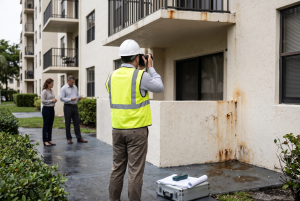 Busque la fecha de registro de la declaración. Esto determina si el Capítulo 82 rige su edificio y si el proceso previo a la demanda le aplica.
- Lea la declaración y los estatutos. Ellos definen el límite de la unidad, controlan si la asociación puede demandar y pueden requerir arbitraje.
- Fecha de terminación sustancial. Busque el certificado de ocupación, las solicitudes de pago finales y los documentos de cierre de las primeras unidades. El plazo de prescripción corre a partir de esta fecha, y es lo primero que un abogado defensor determinará con precisión.
- Reúna los registros de mantenimiento y reclamaciones. Cada orden de trabajo, reporte de fugas, factura de proveedor y correo electrónico de propietarios. Hágalo antes de que lo necesite, porque la ley exige que el informe del ingeniero los describa.
- Cuenta hacia atrás desde tu fecha límite externa. Suma de seis a nueve meses para el proceso previo a la demanda y mira qué queda. Si la respuesta es incómoda, ese es el hallazgo.
- Obtenga una evaluación preliminar antes de encargar el informe reglamentario. Sepa si vale la pena armar un caso antes de que la asociación extienda un cheque considerable para ingeniería.
- No firme nada del desarrollador. Los acuerdos de entrega, las liquidaciones de garantías y las liberaciones de reparaciones contienen habitualmente renuncias exactamente a los reclamos que está considerando.
- Derive cualquier asunto con fecha límite al asesor jurídico el día que llegue. Los veinticinco días de un plazo de RCLA corren se haya reunido la junta o no.
- Hable con el asesor legal antes de que la junta adopte una postura pública. Las actas son descubribles y una resolución redactada con vaguedad puede crear un problema que perdure más que los defectos.
Para juntas directivas, administradores de propiedades y abogados remitentes
Si usted forma parte de una junta directiva o administra una asociación en el área de Houston y ve agua donde no debería estar, el primer paso útil es una conversación, y no un anticipo de honorarios. Le diré si lo que describe parece ser un reclamo por elementos comunes, si el Capítulo 82 siquiera rige su edificio y aproximadamente en qué punto del cronograma se encuentra, antes de que gaste dinero en ello.
También trabajo con abogados remitentes y coinversionistas de casos en asuntos de defectos de construcción en Texas, incluidos reclamos de condominios y elementos comunes de asociaciones de propietarios (HOA). Si tiene un cliente que es una asociación, un plazo que prefiere no asumir y un expediente que necesita capacidad de ingeniería y juicio detrás, comuníquese con anticipación, mientras el plazo límite exterior aún deje margen para trabajar.
Llame al (866) 265-2948 o solicite una evaluación gratuita de su caso. Dígame qué está haciendo su edificio y le diré cuál es su situación.
Preguntas frecuentes sobre defectos de construcción en condominios y asociaciones de propietarios (HOA) en Texas
¿Quién es responsable de los defectos de construcción en un condominio en Houston, el propietario o la HOA?
Depende de dónde esté el defecto. Los defectos dentro de los límites de una unidad son generalmente reclamación del propietario. Los defectos en los elementos comunes, que incluyen los cimientos, la estructura, el tejado, la envolvente del edificio, la estructura de estacionamiento y los sistemas compartidos, son generalmente reclamación de la asociación. Según la Sección 82.052(4) del Código de Propiedad de Texas, los balcones, patios, porches y las puertas y ventanas exteriores diseñadas para servir a una sola unidad son elementos comunes limitados, que siguen siendo elementos comunes. Su declaración puede cambiar todo esto, y esta prevalece.
¿Son comunes los balcones en un condominio en Texas?
Sí. A menos que la declaración o el plano dispongan lo contrario, la Sección 82.052(4) del Código de Propiedad de Texas establece que las persianas, los toldos, las jardineras de ventana, los escalones de las puertas, los pórticos, los porches, los balconcitos, los balcones, los patios y las puertas y ventanas exteriores u otros accesorios diseñados para servir a una sola unidad pero ubicados fuera de los límites de la unidad son elementos comunes limitados asignados exclusivamente a dicha unidad. Los elementos comunes limitados son una categoría de elemento común, por lo que una falla en la impermeabilización de un balcón es generalmente un reclamo a nivel de la asociación, aunque un solo propietario use el balcón.
¿Cuáles son los defectos de construcción de condominios más comunes en Houston?
Fallas de impermeabilización en balcones y cubiertas de podios, filtraciones en la envolvente del edificio y en muros cortina causadas por la lluvia impulsada por el viento, movimiento de cimientos provocado por la arcilla expansiva de la Costa del Golfo y un drenaje deficiente del sitio, desprendimiento y corrosión en estacionamientos y concreto estructural, fallas de plomería y condensación dentro de los pasos de instalaciones en las paredes, y falta de sellado cortafuegos entre unidades.
¿Puede una asociación de condominios demandar al constructor por defectos de construcción en Texas?
Sí. A menos que la declaración disponga lo contrario, una asociación puede iniciar un litigio en su propio nombre sobre asuntos que afecten al condominio según la Sección 82.102(a)(4) del Código de la Propiedad de Texas. Pero la Sección 82.119 exige que una asociación con ocho o más unidades complete primero un proceso previo a la demanda, que incluye el informe de un ingeniero independiente y la aprobación de los propietarios que posean más del 50 por ciento del total de votos asignados. La declaración también puede exigir un arbitraje vinculante en lugar de una demanda según la Sección 82.120, y una asociación que demande en nombre de los propietarios está vinculada por los propios acuerdos de arbitraje de los propietarios. Stanford Development Corp. v. Stanford Condominium Owners Association, 285 S.W.3d 45 (Tex. App.—Houston [1.er Dist.] 2009, sin pet.).
¿Cuánto tiempo tiene una asociación para presentar un reclamo por defectos de construcción en Texas?
Dos relojes corren. El plazo de prescripción es generalmente de dos años por negligencia y daños a la propiedad y de cuatro años por reclamaciones de contratos y garantías, medido a partir del devengo. El plazo de caducidad es generalmente de diez años a partir de la terminación sustancial según la Sección 16.009(a) del Código de Práctica y Remedios Civiles de Texas, y corre independientemente de cuándo se descubrió el defecto. El período de caducidad residencial de seis años de 2023 se aplica únicamente a viviendas independientes y casas adosadas que califiquen cuando el contratista haya proporcionado una garantía por escrito que cumpla con los requisitos, y su definición de “residencia” no incluye condominios de múltiples unidades. La Sección 82.119(h) suspende el plazo de prescripción por un año, y solo si la asociación inicia el proceso previo a la demanda durante el último año de prescripción. No suspende el plazo de caducidad.
¿El proceso previo a la demanda de la Sección 82.119 retrasa el caso de mi asociación?
Sí, aproximadamente de seis a nueve meses cuando nada sale mal. La secuencia consta de una notificación de inspección de diez días, un informe de un ingeniero independiente, al menos noventa días para que las partes inspeccionen y corrijan lo que identifica el informe, una notificación de junta de treinta días y, luego, una votación de los propietarios que posean más de la mitad de todos los votos asignados. Las juntas directivas deben contar hacia atrás desde el plazo límite exterior en lugar de hacia adelante desde hoy.
¿Qué pasa si la junta directiva de nuestra asociación de propietarios (HOA) se niega a actuar ante defectos evidentes?
Los miembros de la junta directiva tienen deberes fiduciarios hacia los propietarios de unidades. Cada funcionario o miembro de la junta es responsable como fiduciario por los actos u omisiones de esa persona. Código de Propiedad de Texas § 82.103(a); Harris v. Spires Council of Co-owners, 981 S.W.2d 892 (Tex. App.—Houston [1st Dist.] 1998, sin pet.). Los propietarios afectados negativamente por una violación del Capítulo 82, la declaración o los estatutos también tienen derecho a reclamar una reparación adecuada conforme a la Sección 82.161(a). Los propietarios también pueden presionar el asunto a través de los documentos rectores, exigiendo una reunión, solicitando una votación mediante petición o postulándose para la junta, y conservan sus propias reclamaciones por defectos dentro de los linderos de su unidad.
¿Se aplica la ley de condominios de Texas a los edificios más antiguos de Houston?
No todo. El Capítulo 82, la Ley Uniforme de Condominios (Uniform Condominium Act), se aplica a los condominios cuya declaración se registró a partir del 1 de enero de 1994. Código de Propiedad de Texas § 82.002(a). Un condominio registrado antes de esa fecha se rige por el Capítulo 81, y solo las secciones específicas del Capítulo 82 enumeradas en la Sección 82.002(c) se le aplican retroactivamente, a menos que los propietarios hayan votado para enmendar la declaración a fin de adoptar el Capítulo 82. Verifique la fecha de registro de su declaración antes de asumir qué reglas rigen a su asociación.
¿Se aplica el proceso previo a la demanda de la Sección 82.119 a un condominio construido antes de 1994?
Probablemente no, pero confírmelo antes de basarse en ello. La sección 82.119 no se encuentra entre las disposiciones del capítulo 82 a las que se aplica la sección 82.002(c) para los condominios cuyas declaraciones se registraron antes del 1 de enero de 1994. El proyecto de ley que creó la sección 82.119 en 2015 no modificó la sección 82.002, y cuando la Legislatura modificó la sección 82.002 nuevamente en 2019, no añadió la sección 82.119 a la lista. El capítulo 81 no contiene ningún requisito previo a la demanda comparable. Aparentemente, ningún tribunal de Texas ha decidido la cuestión, por lo que una asociación más antigua no debería omitir el proceso basándose únicamente en esta lectura. De cualquier manera, la declaración puede imponer sus propios requisitos previos, y la Ley de Responsabilidad por Construcción Residencial se aplica independientemente de qué capítulo gobierne.
¿Se le puede ordenar a una asociación que pague los honorarios de los abogados del constructor si pierde?
Sí, en una acción para hacer cumplir la declaración, los estatutos o las reglas. La sección 82.161(b) otorga honorarios de abogados y costas razonables a la parte ganadora, y la Corte Suprema de Texas ha dictaminado que la disposición es obligatoria y ha sostenido que un demandado gana al obtener una sentencia de nada toma sobre la cuestión principal sin probar daños u obtener una reparación afirmativa. Sunchase IV Homeowners Association v. Atkinson, 643 S.W.3d 420 (Tex. 2022).
¿Qué puede recuperar una asociación de propietarios por defectos de construcción?
Bajo la Ley de Responsabilidad por Construcción Residencial, un reclamante puede recuperar únicamente los daños económicos enumerados en la Sección 27.004(g) del Código de la Propiedad de Texas: el costo razonable de las reparaciones, la sustitución o reparación de bienes dañados en la residencia, los honorarios de ingeniería y consultoría, los gastos de vivienda temporal durante las reparaciones, la reducción en el valor de mercado restante después de que se repara una falla estructural, los honorarios de abogados y las tarifas de presentación de arbitraje, además de la parte del reclamante en la compensación del árbitro. Esos límites dejan de aplicarse si el contratista no presenta una oferta de acuerdo razonable o se niega a comenzar las reparaciones bajo una oferta aceptada.
¿Tiene un condominio que someter a arbitraje su reclamo por vicios de construcción?
Si la declaración así lo establece, generalmente sí. La Sección 82.120(a) del Código de Propiedad de Texas permite que una declaración exija un arbitraje vinculante de reclamaciones sobre la construcción o el diseño de una unidad o de los elementos comunes. Una enmienda que elimine dicho requisito no se aplica retroactivamente a reclamaciones basadas en actos u omisiones anteriores a la enmienda. Sección 82.120(b).
Autoridades citadas
- Código de Propiedad de Texas, Secciones 27.001, 27.002, 27.004, 27.009 (Ley de Responsabilidad por Construcción Residencial)
- Código de Propiedad de Texas, arts. 81.201, 82.002, 82.052, 82.102, 82.103, 82.107, 82.119, 82.120, 82.161
- Cód. de Práct. y Rem. Civ. de Texas, arts. 16.003, 16.004, 16.008, 16.009, 16.051
- Ley del 27 de mayo de 2015, 84.ª Leg., R.S., cap. 730 (H.B. 1455), § 1 (añadiendo los arts. 82.119, 82.120)
- Ley del 17 de mayo de 2019, 86.ª Leg., R.S., cap. 39 (H.B. 302), § 4 (enmienda al § 82.002)
- H.B. 2024, 88.º Leg., R.S. (2023) (que añade el § 16.009(a-2)–(a-4) del Código de Práctica y Remedios Civiles de Texas)
- Sunchase IV Homeowners Ass’n v. Atkinson, 643 S.W.3d 420 (Tex. 2022)
- Bever Properties, L.L.C. v. Jerry Huffman Custom Builder, L.L.C., 355 S.W.3d 878 (Tex. App.—Dallas 2011, sin pet.)
- Stanford Dev. Corp. v. Stanford Condo. Owners Ass’n, 285 S.W.3d 45 (Tex. App.—Houston [1st Dist.] 2009, no pet.)
- Phan v. Addison Spectrum, L.P., 244 S.W.3d 892 (Tex. App.—Dallas 2008, no pet.)
- Daly v. River Oaks Place Council of Co-owners, 59 S.W.3d 416 (Tex. App.—Houston [1.er Dist.] 2001, sin pet.)
- Harris v. Spires Council of Co-owners, 981 S.W.2d 892 (Tex. App.—Houston [1st Dist.] 1998, no pet.)
Este artículo es información general sobre la ley de Texas, no asesoramiento legal, y su lectura no crea una relación abogado-cliente. Cada condominio se rige por su propia declaración y los resultados dependen de los hechos. Consulte a un abogado sobre su edificio antes de actuar o dejar de actuar. The Law Offices of Colby Lewis, PLLC, 815 Walker Street, Suite 452, Houston, Texas 77002. Colby Lewis es responsable del contenido de esta página y no está certificado por la Junta de Especialización Legal de Texas.
